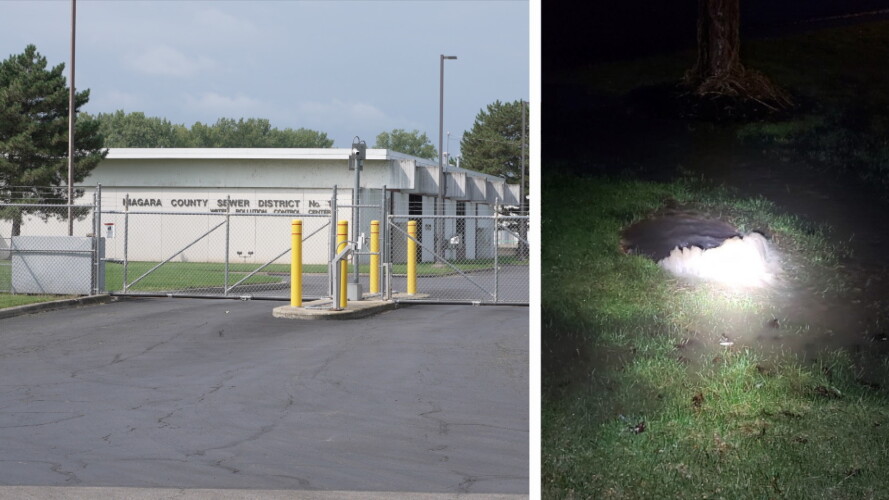


LOCKPORT, N.Y. (WKBW) — A few weeks after raw sewage spilled onto a Lockport lawn, the Niagara County sewer district has issued a moratorium on new large developments in hopes of gaining time to fix overflow sewage issues.
Jennifer Stanton has one of those overflow issues in her own front yard. She tells me that these floods have been happening for years, but most recently, during the major rainfall and county-wide flooding in early August.
Lockport Town Supervisor and Niagara County Sewer District No. 1 Chairman Mark Crocker tells me that the early August storm was a major issue for the sewer system that covers the towns of Lockport, Wheatfield, Cambria, Lewiston, Niagara and Pendleton.
"It is a capacity issue when we get these big storms," Crocker said. "On a normal day-to-day basis, the sewer system takes in 6-7 million gallons of waste, and during the storm on August 2 and 3, we handled 60 million gallons."
Even more worrisome, Sewer District Administrative Director Thomas Blodgett told me the system is only designed for sanitary sewer flow, not stormwater from streets or sump pumps.
"We need them to look at the entire system and see where this inflow is happening," Crocker said.
WATCH: Niagara County Sewer District #1 passes moratorium, will look at overflow issues
In order to find the leaks, the sewer district voted 4-1 to start a 6-month moratorium on building new developments that would exceed 2,500 gallons of sewage output a day. Already approved developments are grandfathered in. Crocker was the lone vote ‘no.’
"I voted no because I didn’t think it was necessary at this moment. We have actions in place right now to help the situation," Crocker said.
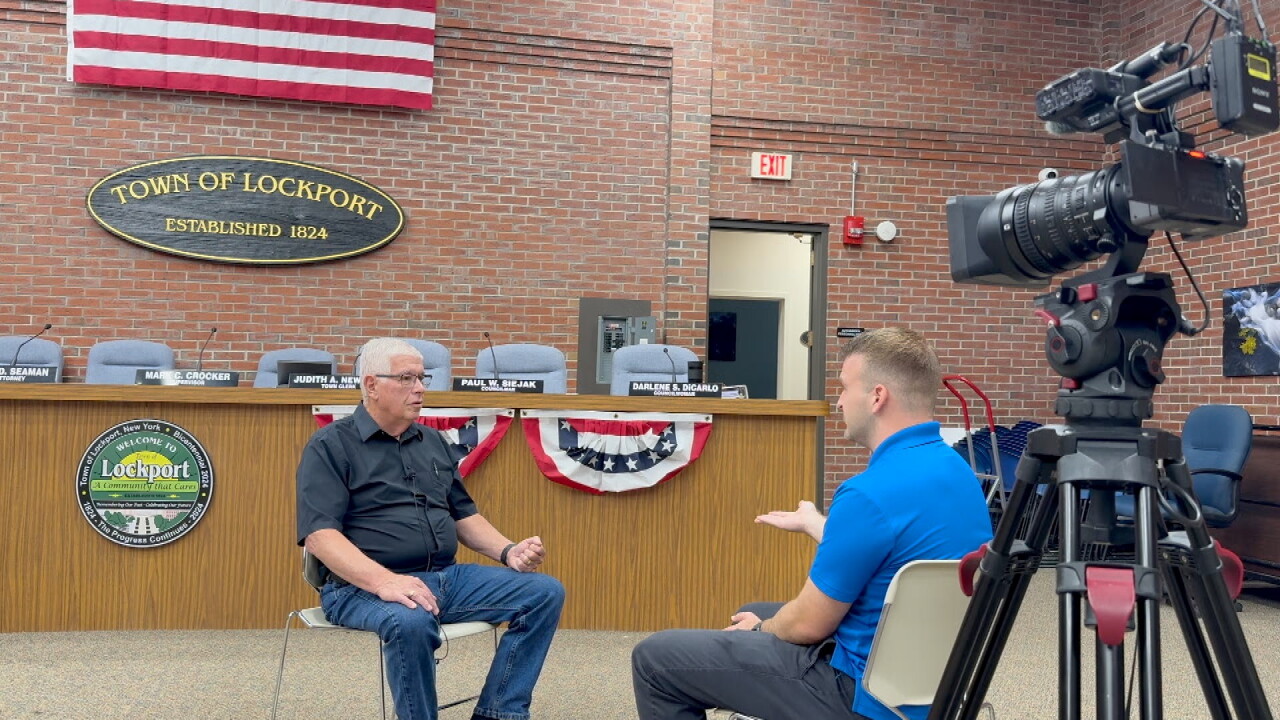
Moratorium or not, Crocker says two main actions are in place. First, a total capacity study is set to be completed this fall to see if improvements need to be made. Secondly, towns have been instructed to conduct inspections into their systems to both track where the excess water is coming from and remind residents to not connect sump pumps to the sewer system.
As for the Stantons, Crocker says he has a plan in motion that he hopes will help solve their flooding issue. He tells me that he plans to start with making sure that both their neighborhood pump station works properly and that all nearby sewage lines are clear.
WATCH: 'So foul': Lockport family frustrated with town sewage spilling onto front yard for 18 years
In response to this story, I was sent the following statement from Blodgett:
“The Administrative Board resolution that was recently passed at the August 26, 2026 meeting placed a six (6) month moratorium on approving any new Downstream Capacity Analyses (DSCA’s). The moratorium took effect immediately and is set to expire on February 26, 2027, unless amended or extended by a subsequent resolution. This situation will be continuously monitored, reevaluated, and updated over the next six (6) months based on meetings and progress with our member towns, their engineers, and county and state officials.
To clarify, this moratorium will not impact any proposed projects or development that have already obtained a DSCA approval from the Sewer District. This will also not impact any development, projects, or individual connections to the sanitary sewer systems that fall below the NYSDEC regulated sanitary sewer extension flow limit of 2,500 gallons per day (gpd), as those projects do not require a DSCA approval from the Sewer District. A DSCA approval is required from the Sewer District as part of the NYS State Environmental Quality Review (SEQR) process when projected sanitary flows from a development or subdivision exceed that state regulatory threshold of 2,500 gpd.
The moratorium resolution was recommended to the Board of Commissioners after Sewer District management staff briefed me on the impacts and severity of the most recent flooding event on August 2 and 3, 2026. The County Sewer District’s Wastewater facilities were overwhelmed by stormwater flooding. The District’s facilities are designed for sanitary sewer flow only (we are not a combined storm and sanitary sewer system). Once the Town sanitary sewer systems are submerged by water from flooded creeks and ditches, we no longer have capacity for normal sanitary flows as the significant flooding and runoff from the storm event inundates the County Sewer District's infrastructure.
The August 2-3 storm event caused widespread creek and subdivision flooding throughout the Sewer District service area, and the flood waters were extremely slow to recede. Very poor creek and drainage ditch conditions were witnessed for several days after the event. Sanitary manholes, sewer vents and infrastructure were submerged under flood waters (some for several days), and there were also reports of residents lifting sanitary manholes and tampering with infrastructure (such as drilling holes in cleanouts and vents) in order to relieve flood waters. This tampering with infrastructure is illegal and in violation of Sewer Use Laws.
This moratorium recommendation is not something to take lightly. Unfortunately, this was required in order to provide the pause needed to work with the appropriate agencies that are responsible for the stormwater infrastructure, including streams and creeks. This will allow state and local officials the time necessary to evaluate potential short- and long-term solutions for stormwater management with the ultimate goal to help mitigate and remove the direct inflow sources that are significantly impacting the sanitary sewer systems. Direct involvement and cooperation from all parties will be necessary to remedy the current situation. The sources of direct inflow to the sanitary sewer systems must be addressed through improved and continuous stormwater management practices, especially given the fact that the intensity of these rainfall and flooding events has become more frequent in recent years. The two (2) main priorities that ultimately led to the recommendation are the protection of existing Town and County sanitary infrastructure, and more importantly the health and safety of the District residents and businesses. This moratorium is just the first step regarding these flooding concerns that will be discussed over the next several months.”

Join the Niagara County Community News Facebook group to connect with neighbors and learn about what's happening in your community.