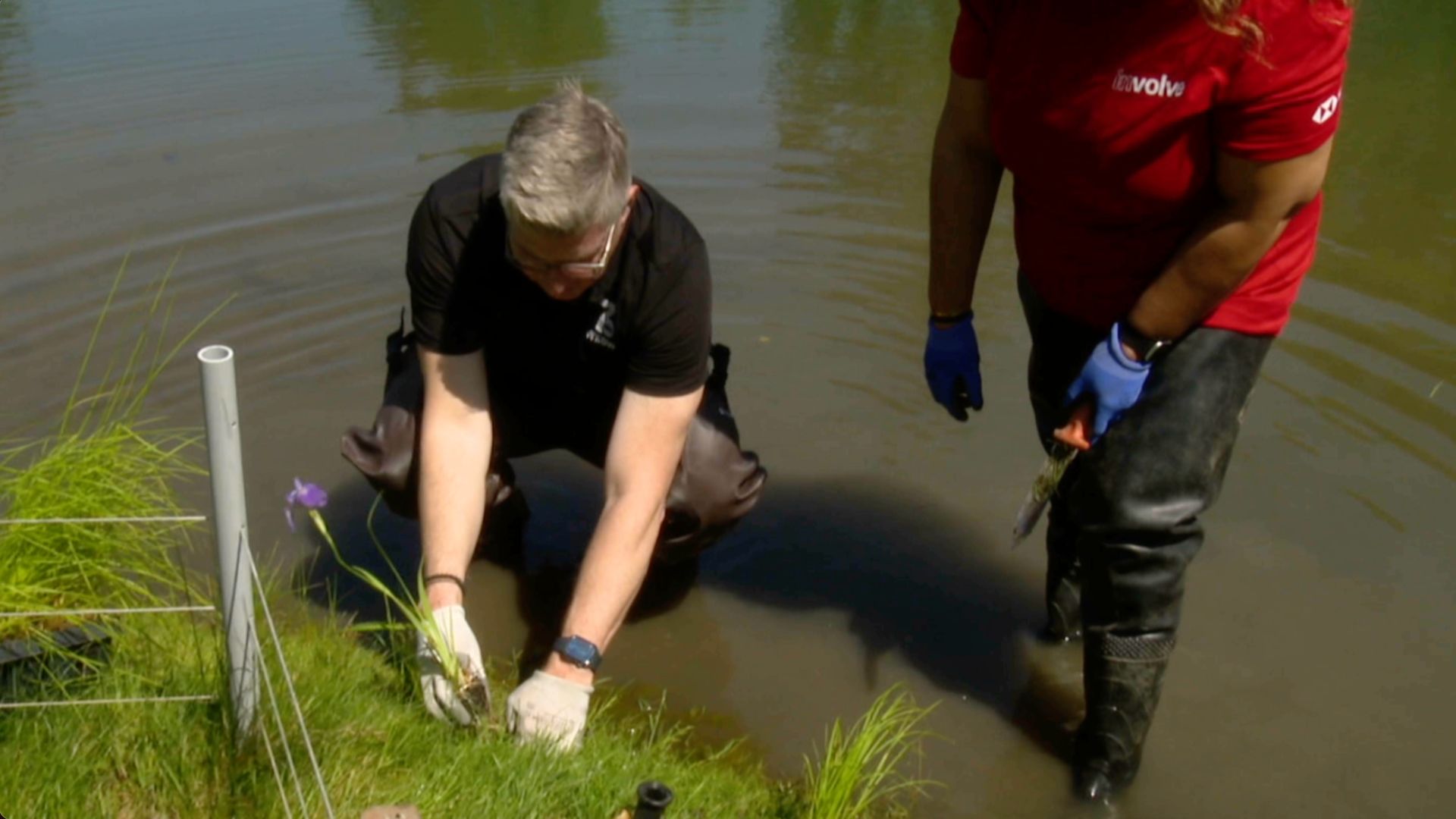


BUFFALO, N.Y. (WKBW) — Buffalo Niagara Waterkeeper and HSBC are working together to restore the ecosystem along Scajaquada Creek at Forest Lawn Cemetery, planting 300 native plants to combat flooding and stormwater pollution that have long plagued the waterway.
"Everything that could go wrong with this creek system has gone wrong," said Jill Jedlicka, executive director of Buffalo Niagara Waterkeeper.
On Wednesday, nearly a dozen HSBC volunteers pulled on hip waders and stepped into the creek to plant 300 native plants across 3 different species, each chosen for its role in supporting the local ecosystem.
"We are restoring wetland plants in this created upland wetland that connects to Scajaquada Creek's floodplain," Jedlicka said.
The plants serve multiple purposes along the creek's shoreline.
"The plants do multiple things. One, these are native species, so they serve as pollinators. They also serve as shoreline stabilization, and they help filter stormwater runoff as it hits the water system," Jedlicka said.
WATCH: Volunteers plant 300 native species to restore Scajaquada Creek at Forest Lawn Cemetery
HSBC is contributing $245,000 to the project and will continue sending volunteers over the next several months. Greg Duval, US Head of Transportation & Logistics Sector Coverage with HSBC, said the bank's commitment goes beyond financial support.
"We always say people are our number one resource here, but the natural resource to me is water, so you have to have clean water, clean air, and it's one of our focuses at the bank," Duval said.
HSBC Business Support Manager Tayrin Tapia said the partnership highlights the value of community education.
"It's important to have these types of non-profits educating on things that maybe we didn't know about before, so I just love all of the work that they are doing," Tapia said.
Buffalo Niagara Waterkeeper says the restoration effort will require ongoing community involvement for years to come.
"All restoration work is literally years. It takes years. It's not just a one-off plant; some plants and we're done. We need sustained volunteerism and sustained stewardship of these sites in order for the ecosystem to come back to life," Jedlicka said.
Anyone looking to support the local environment can reach out to Buffalo Niagara Waterkeeper to get involved.