

ALBANY, N.Y. (WKBW) — State lawmakers are considering new restrictions on automated license plate reader (ALPR) technology amid concerns about how the information is collected, stored and shared.
The issue was the focus of an Assembly hearing that brought together law enforcement officials, civil liberties advocates and other experts. The debate grew tense at times, with lawmakers challenging claims that the technology is not a threat to constitutional privacy rights.
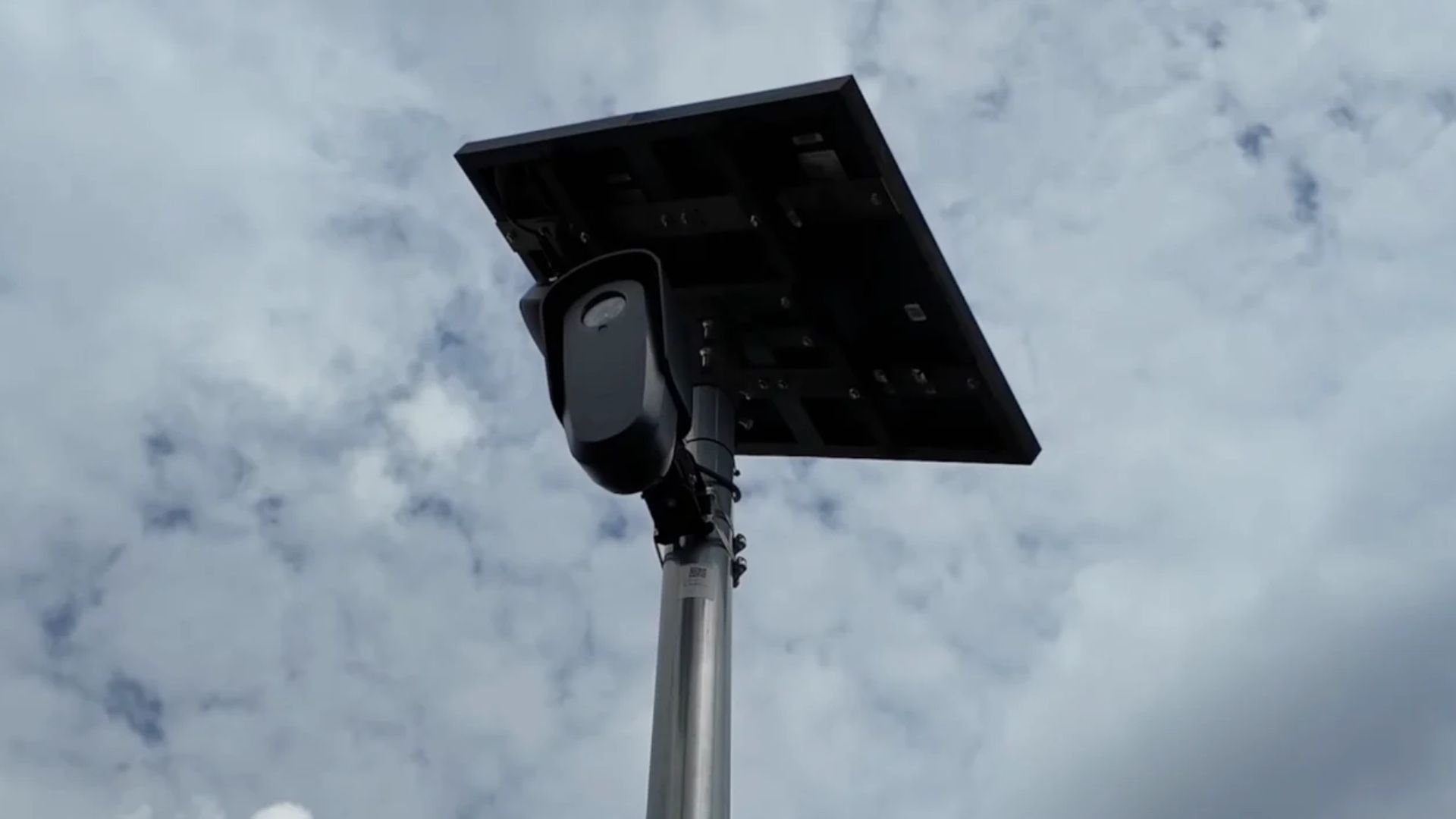
The cameras, often associated with the Flock brand, photograph passing vehicles and capture license plate information, along with the time and location of each scan. The information can then be stored and searched by law enforcement.
Assemblymember Nily Rozic, who chairs the Assembly's Consumer Affairs and Protection Committee, said New York lacks consistent statewide rules governing the technology.
"In New York, we currently lack universal minimum standards governing the collection, retention, and use sharing of information through these systems," Rozic said. "We probably should not leave the protection of New Yorkers' information entirely to the discretion of individual agencies or private companies."
Tyler Nims, chief of the state Attorney General's Law Enforcement Misconduct Investigative Office, said the cameras collect information about millions of innocent drivers.
"Every day in New York, ALPRs capture and store data regarding the movement of millions of people who are not violating any laws," Nims testified.
Nims said that information can be shared among local and federal agencies, raising concerns about how it could be used to track immigrants, protesters and people seeking reproductive or gender-affirming health care.
He also acknowledged a major challenge for people concerned about the technology: they may never know their information has been accessed.
Asked how an innocent New Yorker would discover they had been tracked, Nims said, "I think the answer is there's no way, unless there was some, you know, unless there's some kind of action taken as a result of that, they would never know."
Law enforcement leaders defend the technology
Law enforcement officials who testified argued that license plate readers are an important investigative tool that can help police solve crimes and protect the public.
Raymond Tierney, the Suffolk County district attorney, called ALPRs "a critical tool in investigating, solving, and preventing crime."
He described a case from December 2025 in which a car was stolen with a 3-year-old child in the back seat. The mother had left the vehicle running while she briefly went into a friend's home. Police used license plate reader hits to help narrow down where the stolen vehicle had traveled.
The first hit came eight minutes after the theft near the Long Island Expressway. Another came about 40 minutes later in Central Islip. Police eventually found the abandoned vehicle with the child still inside.
"The police knew where to look because of license plate reader technology, and without that technology, I think that outcome would have been different, unfortunately," Tierney said.
WATCH: NY lawmakers weigh new restrictions on license plate reader cameras amid concerns over surveillance and abuse
Albany County Sheriff Craig Apple also defended the technology, while acknowledging that it can be misused.
Apple told lawmakers he had recently fired a senior investigator and initiated a criminal case after the employee used the system for personal reasons.
"We got a call; we were made aware of one of our employees who had searched a specific plate number over 4,000 times," Apple said.
He said the incident prompted his office to change its policies, limiting direct access to supervisors, requiring searches to be tied to a case number and increasing audits.
Apple said law enforcement needs to retain access to the technology.
"We need every advantage, every tool that we can pack into that toolbox to keep you safe," he said.
Allegations of misuse in Western New York
The hearing also highlighted allegations of misuse closer to home.
Daniel Schwartz, testifying for the New York Civil Liberties Union, said three Cheektowaga police dispatchers used the technology to spy on a female co-worker.
Buffalo attorney Brendan James Gilbert brought a Cheektowaga Police Department internal affairs report to the hearing. He told lawmakers the report involved three dispatchers, one of whom later became a police officer.
7 News was first to report that all three employees received disciplinary action but got to keep their jobs.
"All three of these individuals remain where they are. The officer is still an officer. The dispatchers are still dispatchers. They got discipline. No change," Gilbert said.
Gilbert argued the case illustrates the need for stronger training and oversight.
"What we need is training and oversight," he told lawmakers.
He also challenged other witnesses who had argued that state law has not kept pace with the technology.
"What they have not done is they have not given you what is happening behind the curtain in Western New York. That's why I drove here from Buffalo to do it," Gilbert said.
Debate over privacy and constitutional rights
The hearing featured sharp exchanges over whether the cameras amount to an unconstitutional form of surveillance.
Rafael Mangual, a senior fellow at the Manhattan Institute, argued that ALPR cameras do not provide the kind of continuous tracking that would violate a person's reasonable expectation of privacy. He said the cameras capture vehicles on public roads, where people generally do not have the same expectation of privacy.
"They don't tell you where someone is at a given moment in time," Mangual said. "They tell you where they were, when they were photographed while in motion."
He did support safeguards, including individual user IDs, regular audits and criminal penalties for misuse.
But lawmakers pushed back, questioning why so many cameras are needed and whether the technology can be used to piece together a person's movements.
Assemblymember Pamela Hunter, a Democrat from Syracuse, challenged Mangual.
"Before these cameras, 20 years ago, how were police doing their job without these cameras?" she asked.
"Not as easily, but that doesn't make it unconstitutional," Mangual responded.
Rena Ajai, representing the Electronic Frontier Foundation, took a much stronger position, arguing the technology is too intrusive to be used at all.
"It allows for such an intrusive surveillance that it's inherently so dangerous that we shouldn't be using it at all," Ajai said.
Ajai urged lawmakers to require warrants for searches of stored ALPR data, sharply limit how long information can be retained and restrict sharing with federal and out-of-state agencies.
What happens next?
Several proposals before the Legislature would establish new rules for how ALPR technology can be used in New York.
One major proposal, sponsored by Assemblymember Hunter, would limit the purposes for which government agencies can use the systems, restrict data retention and sharing and require audit logs and public reporting.
The bill, A10808A, was amended and sent back to the Assembly's Consumer Affairs and Protection Committee in October. It remains in committee.
The question now is whether lawmakers will take action when the new legislative session begins in January.