

AMHERST, N.Y. (WKBW) — Healthcare leaders across Western New York are coming together to address a growing crisis impacting hospitals, workers, and patients alike: a critical shortage of healthcare staff.
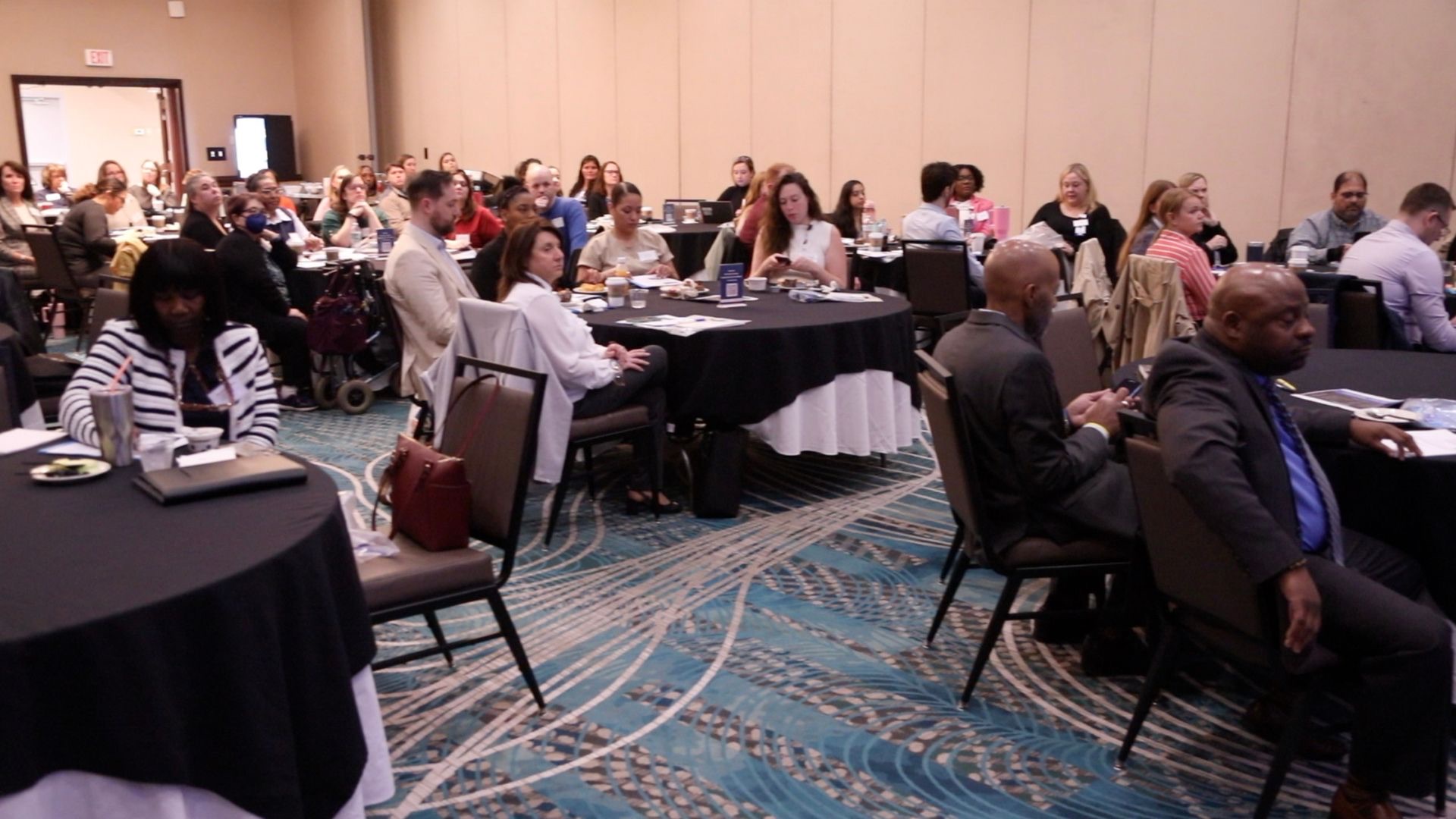
At the first-ever Western New York Healthcare Development Consortium, more than 40 organizations—including hospitals, colleges, workforce groups, and labor unions—met to focus on long-term solutions to strengthen the region’s workforce pipeline.
"We’re seeing a shortage of… really everything," said Julie Klein, Chief Human Resources Officer at ECMC. "If we do not start doing something to build up our workforce, but also retain our workforce, we are going to be in dire straits."
The impact of those shortages is already being felt on the front lines.
WATCH: Western New York consortium seeks solutions to severe healthcare worker shortages
"One of the things that you constantly can run into is burnout," said Aaron Archie, an administrative organizer with 1199 SEIU. "But with the shortage, you run into burnout… it doesn't matter if you are in the hospital or even in the nursing homes."
According to a report from the New York State Comptroller, some counties across the state lack access to even basic healthcare services, with few or no providers in fields like pediatrics, obstetrics and gynecology. In many cases, physician-to-patient ratios fall well below recommended levels.
At the same time, staffing challenges are putting increased pressure on those already in the field. A 2024 report from the New York State Nurses Association found that more than half of reported hospital shifts failed to meet required staffing levels for critical care patients.
Leaders say the issue is not just about filling jobs—it’s about building a sustainable system for the future.
"That’s the purpose of today’s conference," said Ian Barrett, Executive Vice President and Chief People Officer at Kaleida Health. "To bring together employers, workforce developers, colleges and universities, and labor unions to talk about how we collectively improve the supply."
Part of that strategy includes introducing students to healthcare careers earlier and highlighting roles that don’t necessarily require a college degree.
Organizers say success will be measured over time, with a focused plan to improve the talent pipeline for at least two critical healthcare roles each year.
As demand for care continues to rise, leaders say collaboration will be key to preventing the problem from getting worse.