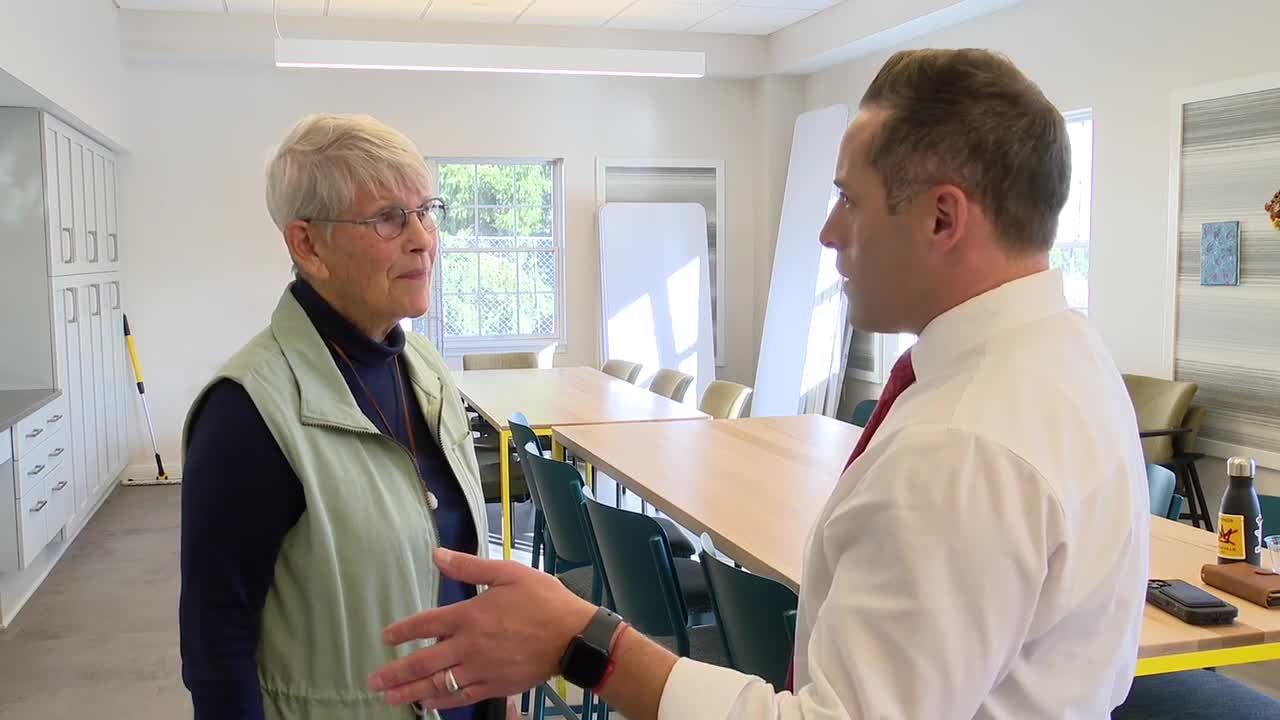


BUFFALO, N.Y. (WKBW) — The slogan on Bev Halligan's T-shirt says everything you need to know. In big letters, it says "fight truth decay."
"I really want to hear what the truth is, what the facts are, and I don't feel we're getting them. And I think town hall meetings are a great way to do that," said Halligan.

Halligan, from Orchard Park, wants more accountability from her lawmakers in Congress — specifically calling out Representative Nick Langworthy for his lack of in-person town halls.
"Come have some accountability, some responsibility for where this government is going, where our country is going, and tell us how you're going to help us right the ship a little bit," Halligan said.
Langworthy, instead, does telephone town halls once a month or so.
"It's really great to have a mindset of Mr. Smith goes to Washington, and everyone's going to have a relationship with you like they would a city councilman," Langworthy said. "It's a big district and the way the New York State Legislature has cut my district, it's four hours end to end. So you know it's impossible for me to be everywhere."
Comments on Langworthy's Facebook page also call for in-person town halls, accusing his office of screening questions and picking and choosing those that are convenient. It's something Langworthy denies.
"I have plenty of people that disagree with me. Plenty of people," Langworthy said. "We go looking for people that are having disagreements. I am totally fine with disagreements."
According to the Center for Effective Lawmaking, between 2014 and 2022, "American lawmakers held more than 23,000 town hall meetings." But elected representatives are neither constitutionally nor legislatively required to.
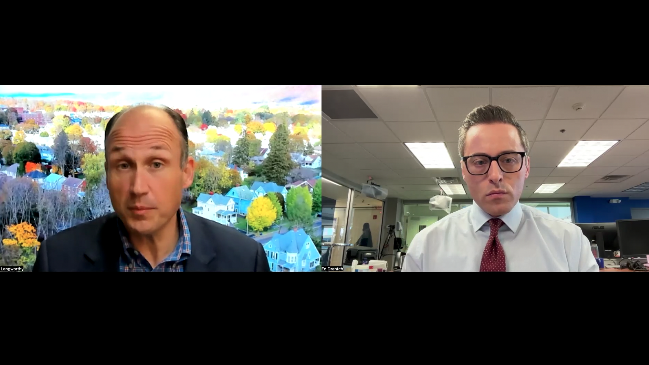
"Functionally, lots of members of Congress are not holding them anymore, and it doesn't seem to be materially affecting their chances," Jacob Neiheisel, an associate professor of political science at the University at Buffalo, said.
WATCH: 'Have some accountability': Some Western New Yorkers are demanding in-person town halls from politicians
When I asked Neiheisel why he thinks lawmakers are not having these town halls, he pointed to strategy.
"That's a great question. I think some may... but it might be people who are in particular strategic positions. Challengers might want to do this more than incumbents. Those who may have a few points in the polls to make up might be more willing to do this. It's just a risky strategy," Neiheisel said.
Democratic Congressman Tim Kennedy sent me a list saying that since 2024, he has held almost two dozen community meetings or town halls.
"Look, folks know I'm very accessible. They know I'm approachable. I try to be everywhere, but they can call my office anytime," Kennedy said.
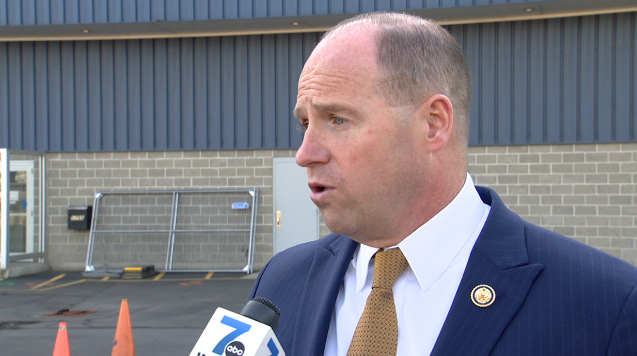
Some of Kennedy's events are in person, while some have been tele-town halls associated with other organizations and politicians.
When I asked Kennedy about the difference between what he does and what Langworthy does, he said he has done both.
"I've held a tele-town hall. I think it's important to do both," Kennedy said.
Control is at the center of it all. The Center for Effective Lawmaking explains that "town hall meetings require lawmakers to concede some measure of control over event circumstances, which in turn raises the risk of a costly blunder or embarrassing response turned viral video" — like in a town hall with Congressman Mike Lawler in New York's Hudson Valley, after a woman was removed from the audience.
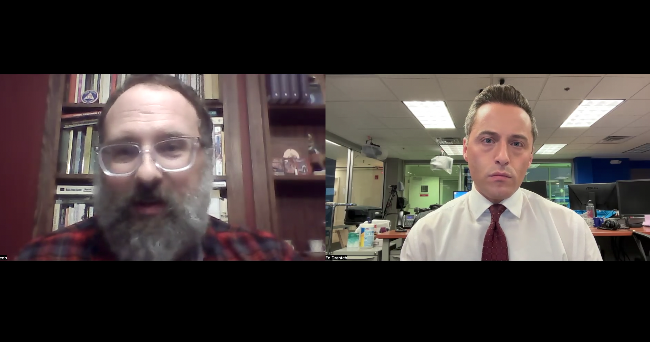
Drantch: When you manage optics and accountability, where do the two meet?
Neiheisel: That's a particularly good question, and that's one for voters to decide for themselves.
For Halligan, the productivity of town halls outweighs the risk of a shouting match.
"Yeah, I know they can turn into shouting matches, and they can turn into screaming matches, and that has to be controlled. But I think they can be very productive, not only for the candidates, but for the people in the community to see each other, get together, have a cup of coffee, let's talk things over and figure out how we're going to move forward. We're all in the same boat. We're just — some are rowing in one direction, and some are rowing in the other, and we got to start rowing in the same direction," Halligan said.
Langworthy said he's not about to make changes to how he's handling town halls. Meanwhile, I've reached out to Claudia Tenney's office — any number of times — to ask the same questions about town halls. I am yet to hear back.
This story was reported on-air by a journalist and has been converted to this platform with the assistance of AI. Our editorial team verifies all reporting on all platforms for fairness and accuracy.