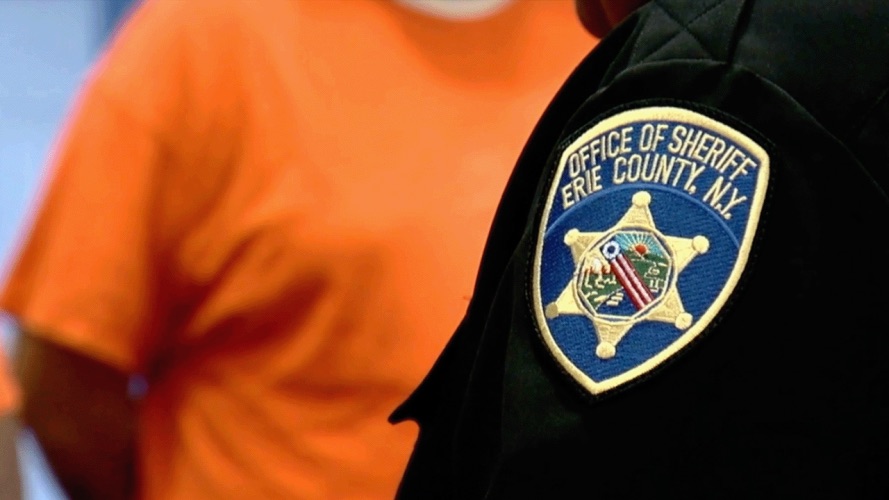


BUFFALO, N.Y. (WKBW) — A group of clergy members released the first independent public report examining conditions inside Erie County's two correctional facilities, offering both praise and recommendations for improvement based on extensive visits and interviews over the past two years.
The Erie County Clergy Jail Visiting Project presented its findings on Wednesday, highlighting areas where the county has made progress while identifying five major areas of concern that need attention.
"Incarcerated people are as fully human as people outside," said Steve Hart, an analyst with the Erie County Clergy Jail Visiting Project. "No matter how well they are run, they need to be watched over."
The report is based on six visits by clergy members to both the Erie County Correctional Facility in Alden and the Erie County Holding Center in Downtown Buffalo. The visits included more than 100 interviews with people housed in the facilities.
"In each visit, a team of clergy goes to housing areas that the team chooses, and once there, they observe conditions, and they interview people that are living there," Hart said.
Progress noted under Sheriff Garcia
After analyzing the interviews, the group credited Erie County Sheriff John Garcia for increasing programming inside county jails and for a decrease in the number of deaths, citing only one death in 2025.
The Very Reverend Rebecca A. Barnes, dean of St. Paul's Episcopal Cathedral in Buffalo, said her hopes for the project are "that it sheds light on areas that need attention, as well as it has focuses on areas where we have made improvement."
WATCH: Clergy group releases first public report on Erie County jail conditions
Five areas of concern identified
The report highlighted five major areas in need of attention and provided recommendations for addressing them: racial justice, food, equal treatment for women, medical care, and religious worship and religious discrimination.
Jerome Wright, co-director of the New York State Jails Justice Network, emphasized the constructive nature of the report.
"This report is about changing situations that we have the power and authority to change," Wright said. "It is not about criticism or calling people out. It is about making sure that the people who reside in those facilities and work in those facilities have the best opportunity to leave there better than they came in each and every day."
Rabbi Alex Lazarus-Klein of Congregation Shir Shalom in Amherst stressed the importance of transparency and action.
"It's really important that we shine a light on this and try to do something," Lazarus-Klein said. "A lot of the changes suggested are not big; they are things that we are capable of doing."
Sheriff's office responds
Erie County Sheriff John Garcia provided a statement in response to the report, saying in part: "Because of the hard work of our staff, we continue to make meaningful strides in offering modern correctional services that emphasize rehabilitation and reentry."
Garcia added: "Sadly, the antiquated facilities that we operate, along with budgetary constraints, limit what we can do."
The sheriff's office said it is constantly evaluating policies and procedures and that the office just became aware of the report and will now review its content and recommendations.
Read the full statement here from Sheriff Garcia below:
""We are deeply grateful to the Erie County Clergy Jail Visiting Project for recognizing the many advancements of our Jail Management and Correctional Health Divisions over the past four years. The Erie County Sheriff's Office is proud to have expanded its award-winning programming for incarcerated individuals, earned accreditation from the National Commission on Correctional Health Care and implemented the Medication Assisted Treatment Program. Consent decrees that were in place at the state and federal levels when I took office have since been terminated. Earlier this year, the New York State Commission of Correction conducted a review of our Correctional Health services and didn't find a single violation of standards. Because of the hard work of our staff, we continue to make meaningful strides in offering modern correctional services that emphasize rehabilitation and reentry. Sadly, the antiquated facilities that we operate, along with budgetary constraints, limit what we can do. The Erie County Sheriff's Office is constantly evaluating its policies and procedures. As we only became aware of this report from the media, we will now review its content and recommendations."
You can find the full report below: