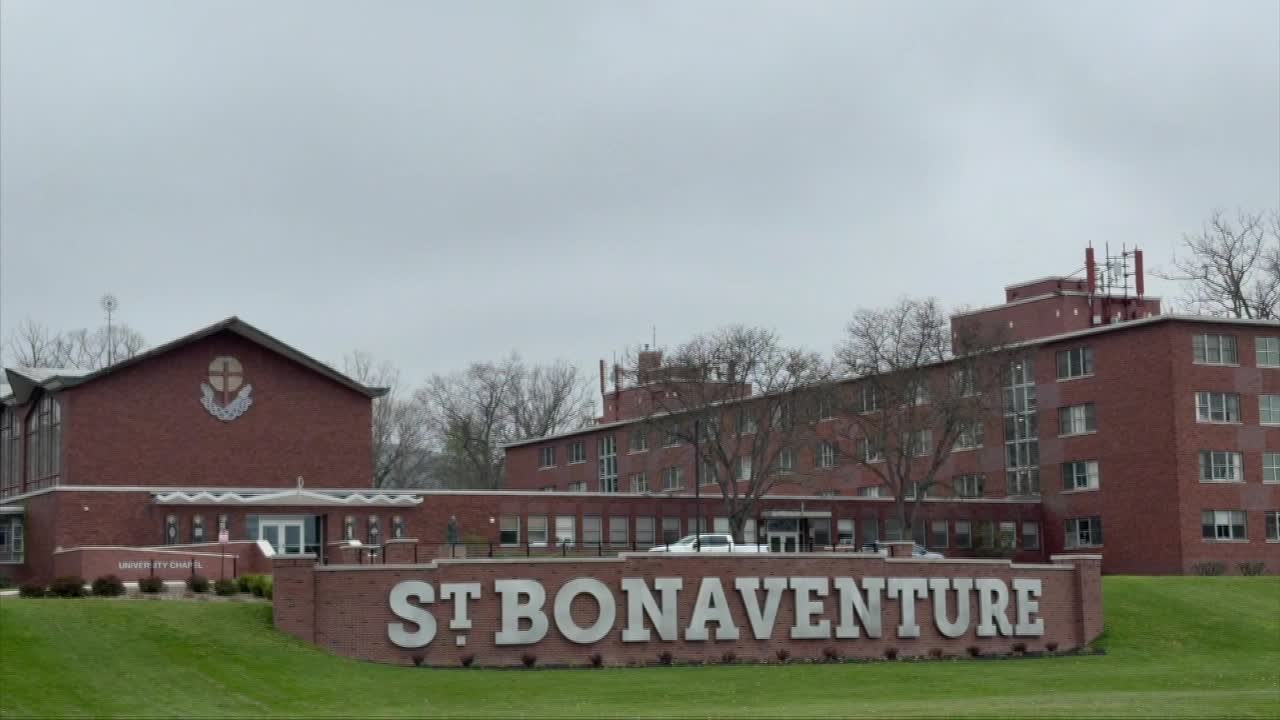


ST. BONAVENTURE, N.Y. (WKBW) — St. Bonaventure University is launching a new AI Literacy minor this fall, part of a broader expansion of computer science offerings designed to give students across all majors practical skills with artificial intelligence.
The minor, approved by the university's Faculty Senate, is one of several new programs that also include Data Analytics, Game Design, Computer Information Systems and App Development. But the AI Literacy minor represents the university's most significant push into a technology that university leaders say is rapidly changing how students will work after graduation.
Dr. Chris Bopp, associate professor and chair of the Department of Computer Science, said the minor is designed to give students a foundation in how AI works, not just how to use it.
"These are not necessarily going to be computer science majors," Bopp said. "These are going to be students from across campus. The idea is that they're able to take this minor and really apply it to their discipline, to their area that they're becoming experts on."
WATCH: St. Bonaventure University to offer AI Literacy minors beginning this fall
The minor includes courses in programming ethics, computers and society, and a variety of electives that allow students to apply AI to creative endeavors, decision-making, archival research and philosophy. One course in the history department makes use of AI for archival research, while a philosophy course called Techno Philosophy explores the philosophical dynamics of artificial intelligence.
The university is also providing ChatGPT Edu licenses to all undergraduate students, faculty and many staff members beginning this fall. Dr. David Hilmey, provost and vice president for academic affairs, said equal access to the tools was a priority.
"We wanted those tools to be secure," Hilmey said. "We wanted to make sure that if a student is going to be using it, it had security and privacy as a component. And we also wanted to make sure that all of our students had access." Hilmey continued, "We saw early on that this was going to be something that was going to really change the nature of work, and therefore, as educators, we had to make sure that we were thinking about how we were going to prepare our students for this brand new world that was coming for them."
But university leaders also acknowledged concerns about AI, including its potential to undermine critical thinking and writing skills. Hilmey said not every class should use AI, and students need to know when not to rely on it.
"We recognize that not every class should be using AI," Hilmey said. "There are some classes that AI should not be a part of at all because we need to learn and identify and assess skills of who we are, not of what AI can do."
Bopp said the concerns about AI are real and significant. He noted that the department takes a human-centered design perspective, focused on what people need rather than assuming technology is universally beneficial.
"We have to be very, very careful about how we approach these tools," Bopp said. "We're not just saying the technology is universally awesome. The technology is a tool for people, and we have to make sure, what do people want, what do people need, and how are we designing the tools so that we're helping people as opposed to causing harm."

"When you understand that all it's doing is statistically predicting the next word, it actually doesn't know what it's saying," Bopp said. "It's just saying what's the statistically most likely next word in this sequence. When you consider that, you realize it's actually not all that intelligent yet."
Hilmey said the university's Franciscan values have guided its approach to AI, emphasizing ethics and discernment alongside technical skills.
"We wanted to make sure that we were going forward in a way that was including human skills as well as these new AI skills," Hilmey said. "We want students to come out not only having these new AI skills that are going to be critical for their success, but that they have those other skills that might start to disappear a little more from our world."
Students on campus also expressed enthusiasm for AI, while also acknowledging its risks. Chris Mordois, a student, said he uses AI personally.
"I think it's a great tool for students, especially managing hard workloads," Mordois said.
Luke Anthony Finelli said he finds AI helpful for school and for athletics, including nutrition and workouts.
"I think AI is very helpful for school, especially for structuring, helping you structure assignments," Finelli said. "It's helpful for everything."
Isaiah Anderson, another student, said he uses AI daily but cautioned against overreliance.
"I use AI probably every day," Anderson said. "I think it's helpful if you use it right."
The AI Literacy minor will be available to students across all majors beginning in the fall semester.