

BUFFALO, N.Y. (WKBW) — Illegal dumping has plagued private and city-owned vacant lots in Buffalo for years, and an abandoned boat now sitting at the Wonder Bread factory shows the problem isn't going away.
I first spoke with Kevin Hayes at the East Side site back in July, after he reached out to tell me about the ongoing issue.
"Someone left their boat here," Hayes said. "It's been here for two months."
He said the situation has worsened since the summer.
"The city hasn't taken anything away," Hayes said.
The property is owned by Harry Stinson, who also owns the vacant Buffalo Grand Hotel. Hayes said he believes it is Stinson's responsibility to clean the site, but that the city needs to tackle illegal dumping in the neighborhood - both on the streets and on city-owned vacant lots.
WATCH: Community group fighting back after illegal dumping plagues Buffalo
Just a few blocks away, the city is testing a way to do exactly that. Fencing on Northampton Street is part of an anti-dumping pilot project. It has been in place since July, and the city said the fencing will remain in place with the hope of expanding the project to other sites.
Other city-led prevention measures include trap cameras, as first reported by 7 News. A city spokesperson said there are now four active trap cameras and they have plans to activate a further four next week. They did not reveal the location of the cameras.
WATCH: Buffalo to deploy trap cameras to crack down on illegal dumping citywide
Some community members nearby have also taken matters into their own hands.
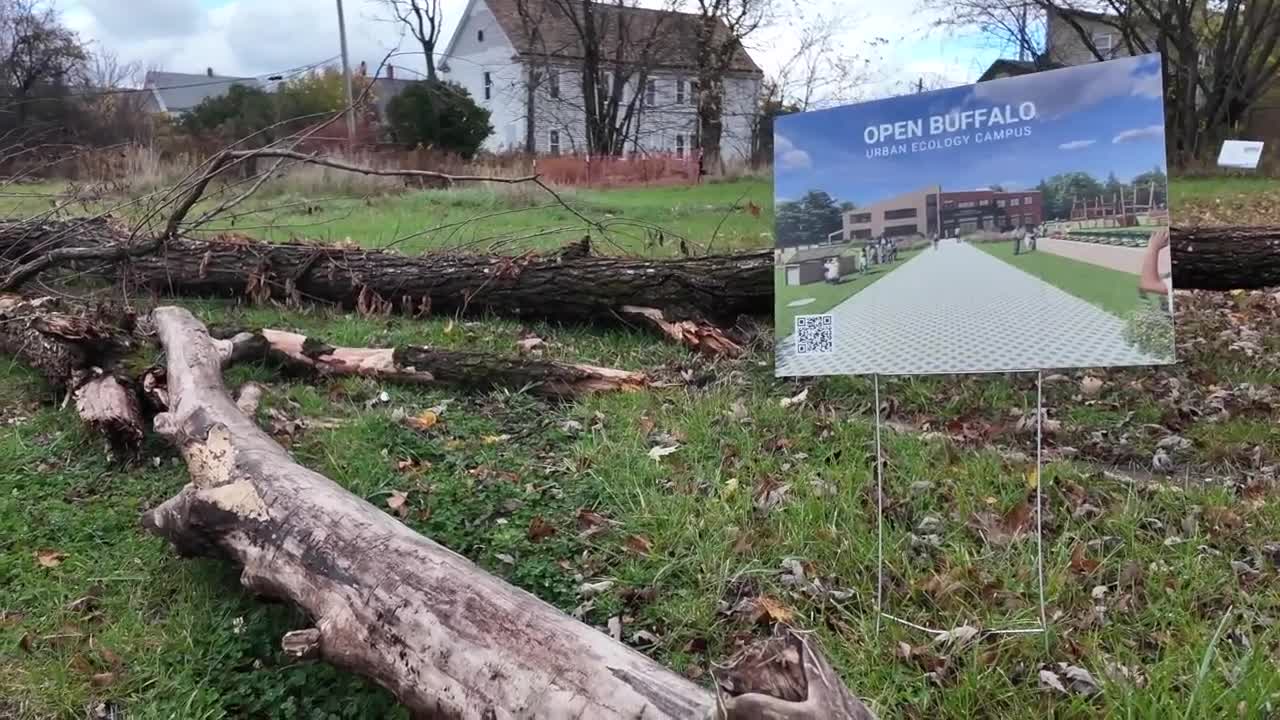
One dead-end street is surrounded by city-owned vacant lots. The nonprofit Open Buffalo is stewarding the 10-acre property, with plans to turn it into an eco campus. The site was a target for illegal dumping in September.
"They went in the back and dumped a home - furniture, passport, license and all of those things," said Franchelle Parker, Executive Director at Open Buffalo.
Parker and her team have created natural barriers to prevent illegal dumping from happening again.
"We've had some of our volunteers go through what's called 'CPTD,' crime prevention through environmental design," Parker said.
Volunteers have used tree limbs and rocks to create barriers. The nonprofit has also installed surveillance cameras.
"As of right now, it's kind of been working," she said.
When I asked what the city should be doing to step up, Parker pointed to resources and ownership.
"Sell us the land so we can put up permanent structures," Parker said.
This story was reported on-air by a journalist and has been converted to this platform with the assistance of AI. Our editorial team verifies all reporting on all platforms for fairness and accuracy.