


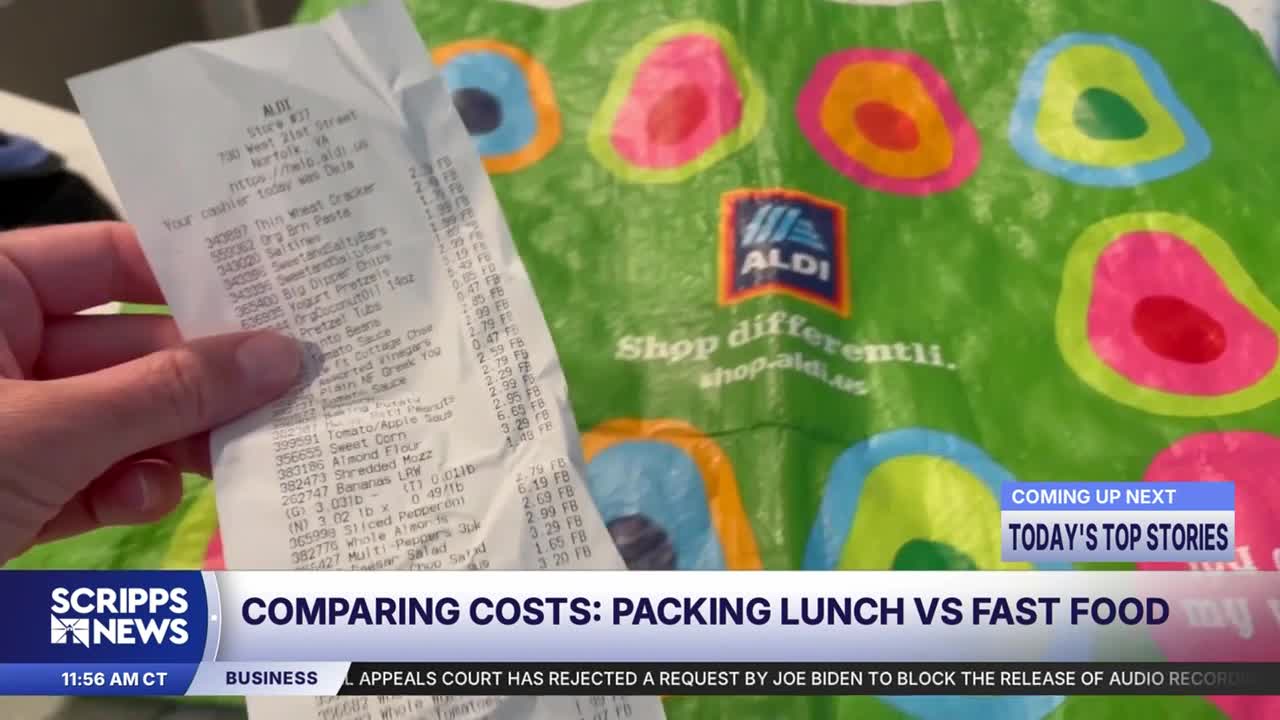


With grocery and restaurant prices both climbing, millions of workers face the same daily question: Is it cheaper to pack a lunch or buy one?
The latest Consumer Price Index from the U.S. Bureau of Labor Statistics shows grocery prices are up 2.7% over the past year. The cost of eating out has climbed even more — up 3.4% and fast-food prices have risen about 3%.
RELATED STORY | Price hikes pushing consumers to abandon their favorite brands
Peter McHenry, Paul R. Verkuil Professor of Public Policy and Economics and Department Chair, says the comparison between the two may not shift as much as people expect.
"If prices rise at the grocery store and prices rise at restaurants, the comparison between the two might not change all that much," McHenry said.
A review of recent grocery receipts shows a packed lunch — including a sandwich, fruit, a drink, and a snack — comes out to about $3. By comparison, a fast-food combo meal can run anywhere from $8 to $14. A sit-down lunch with tip averages around $18.
But McHenry says the decision isn't purely financial. He says economics is about understanding how and why people make the choices they make, which means factoring in more than just dollars.
"Packing my lunch has consequences for sure... how much money I spend, but also nutrition, because that could differ at a restaurant, also relationships that I have. So, if I pack my lunch and eat it in my office alone, that's different than going out to the restaurant that all my coworkers are going out to," McHenry said.
FROM THE ARCHIVES | Helping your child navigate school lunch options
For workers whose primary goal is saving money, McHenry says the answer is fairly straightforward.
"I think it's pretty clear that if you want to save money then you can pretty clearly get food for a lower price if you prepare the right food at home," McHenry said.
His broader advice applies to any financial decision.
"The big principle is just think about all of the consequences - money, time, just every resource that you give up when you make a decision, and that will help make up probably a better decision," McHenry said.
The next Consumer Price Index is scheduled for release on Aug. 12.
This story was originally published by Erin Miller with the Scripps News Group in Norfolk, Virginia.
