


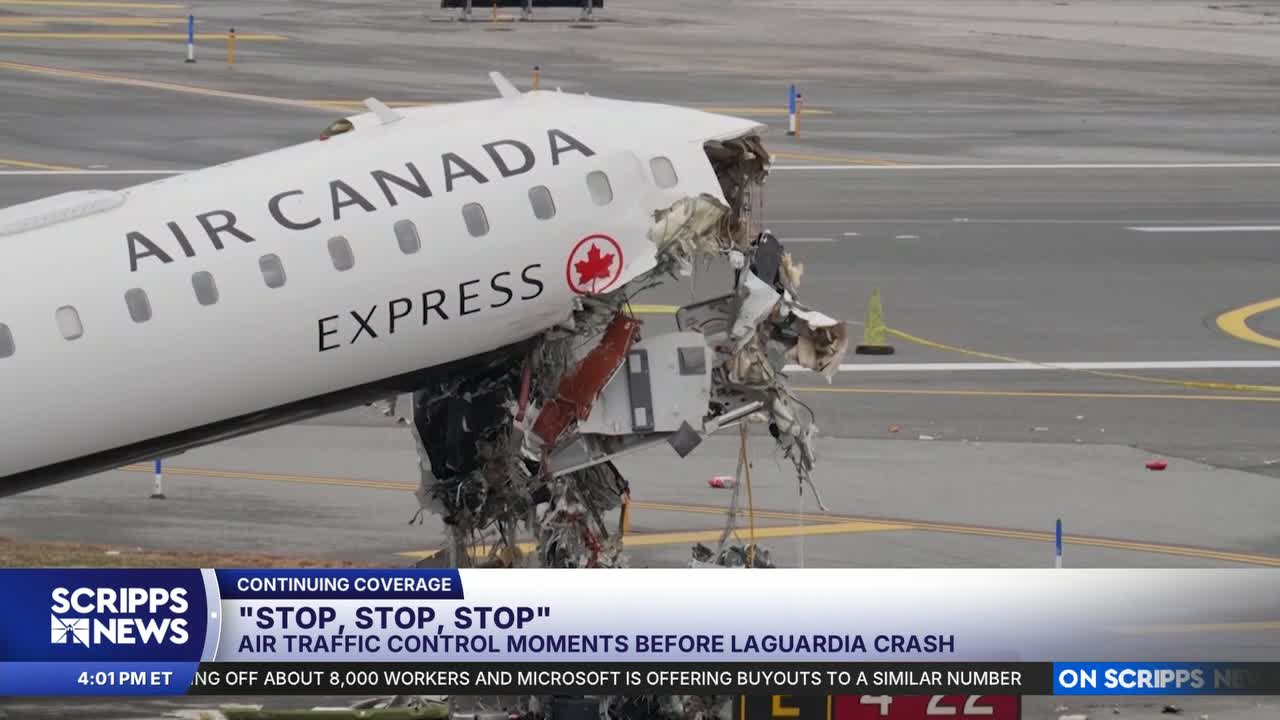



The National Transportation Safety Board released preliminary findings in its investigation of a deadly collision between an Air Canada plane and a firetruck on the runway at New York’s LaGuardia airport last month.
An air traffic controller cleared the plane to land and then gave permission for the firetruck to cross the same runway. Less than a minute later, the control tower ordered the truck to stop but the truck kept going.
The NTSB report says a crew member on the firetruck heard a command to stop but did not know who the controller was addressing.
IN CASE YOU MISSED IT | LaGuardia Airport runway reopens, days after crash on tarmac killed 2 Canadian pilots
The crew member said she turned left and saw the airplane’s lights as the plane barreled toward them on the runway. The plane was traveling at 104 mph.
The pilot and copilot died and their seats separated from the plane during the impact, the NTSB says. The front flight attendant’s seat also broke away from the aircraft but she survived.
The rest of the seats stayed intact. The flight attendant in the back did not know what happened and was trying to call the pilots in the moments after the collision, the NTSB reports. All passengers survived but there were six serious injuries. Crew members on the firetruck were also hurt.
RELATED STORY | Transportation Secretary Sean Duffy touts $12.5B upgrade for outdated air traffic control tech
LaGuardia had a radar and satellite based surveillance system in place to track ground movements, but firetrucks at the airport did not have transponders able to share location.
There were two controllers on duty, according to the NTSB, which said that was consistent with the time of night when the disaster occurred. The NTSB is likely to release a full report in about a year.
