

A string of Trump-backed primary victories over incumbent Republicans is raising new questions about the future of the GOP and what November's general election could look like — both in Texas and across the country.
The results follow a pattern that has accelerated through the 2026 primary season. President Trump has endorsed primary challengers against sitting Republicans who have broken with his agenda, and those challengers have won. Sen. Bill Cassidy, Rep. Thomas Massie, a group of Indiana state Senate Republicans, and now U.S. Sen. John Cornyn have all fallen to Trump-backed opponents.
Cornyn lost to Texas Attorney General Ken Paxton on Tuesday night. Paxton received 63% of the vote. Cornyn received just over 36%.
RELATED STORY | Texas Attorney General Ken Paxton wins GOP runoff for US Senate, ousting longtime Sen. John Cornyn
The margin underscores how effectively Trump has been able to clear the field in primaries this cycle. The message to Republicans in Washington is direct: defy the Trump agenda and face a primary challenge.
But the general election picture is more complicated. Roughly 30% of Texas voters — approximately 500,000 people — cast ballots for Cornyn despite his loss. Those are reliable Republican voters who are by no means liberal and would not typically consider voting for a Democrat. How they behave in November is an open question. They could vote for Paxton, cross party lines to support the Democratic candidate, or simply stay home. The answer could determine the outcome of races up and down the ballot.
That dynamic is not unique to Texas. Across the country, Trump's primary dominance has reshaped the Republican field heading into November. Candidates who survive their primaries will do so largely because of Trump's support — or because they avoided his opposition. That could leave the general election field populated with candidates whose appeal is strongest among the Republican base but who may face challenges winning over moderate and independent voters.
The longer-term implications stretch into 2028 as well. Several Republican senators are up for re-election that year, including Sen. Lisa Murkowski of Alaska and Senate Majority Leader John Thune. If Trump continues to use his endorsement as a political weapon as he approaches the end of his term, those races could be significantly affected. At the same time, the Republican Party will be working to choose Trump's successor, while Democrats face their own unsettled questions about who will lead their ticket.
RELATED STORY | Ed Gallrein defeats US Rep. Thomas Massie in Kentucky GOP House primary
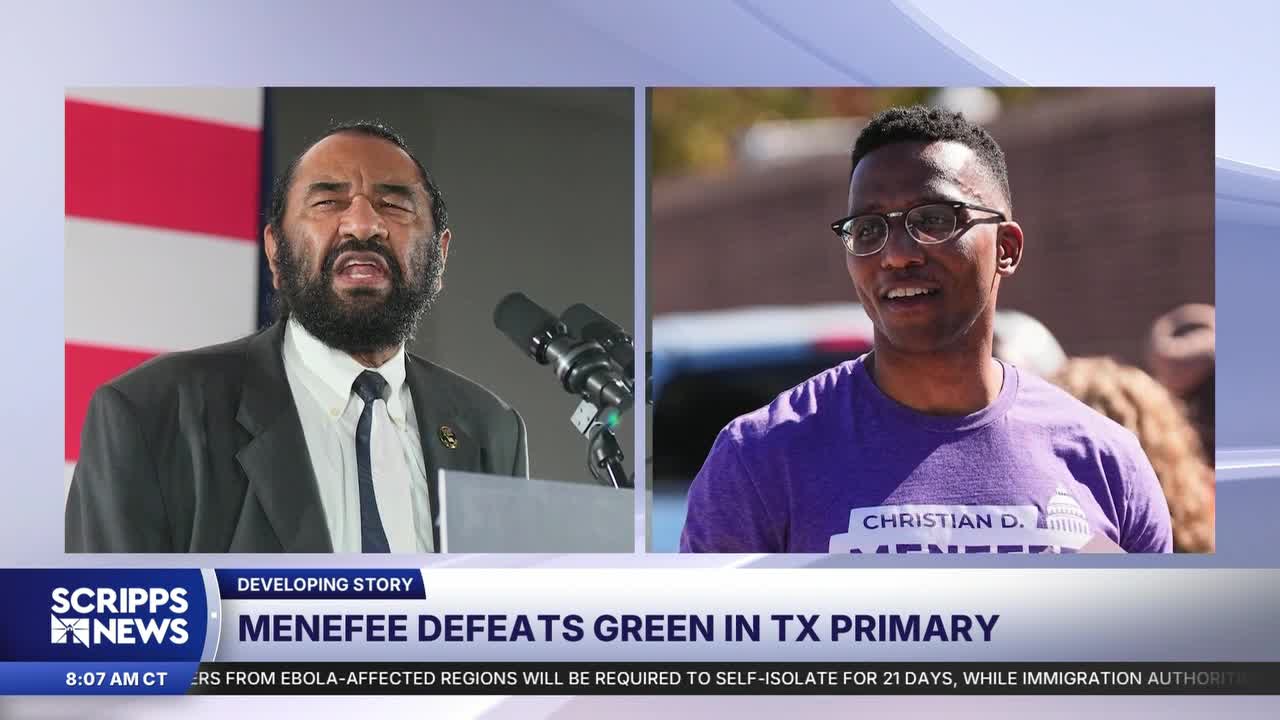
Tuesday's results in Texas also illustrated how redistricting is reshaping congressional races for Democrats. Republican-led redistricting redrew congressional lines across Texas, squeezing Democrats into a smaller number of safe districts. That left two sitting Democratic incumbents — Rep. Al Green, who has served since 2004, and Rep. Christian Menefee, first elected two years ago — running against each other in the same district.
Menefee won. Green's more than two-decade congressional career is now apparently over. Green had gained national attention in 2017 when he became the first member of Congress to introduce impeachment charges against Trump. His own party moved quickly to set aside those efforts at the time. Trump was ultimately impeached twice by the House during his first term.
Green's defeat is being viewed as a sign of generational change within the Democratic Party. But unlike the Paxton-Cornyn race, the contest was less an ideological battle than a structural consequence of redistricting — a preview of the kinds of races that could emerge in other states where similar line-drawing has forced incumbents into the same districts.