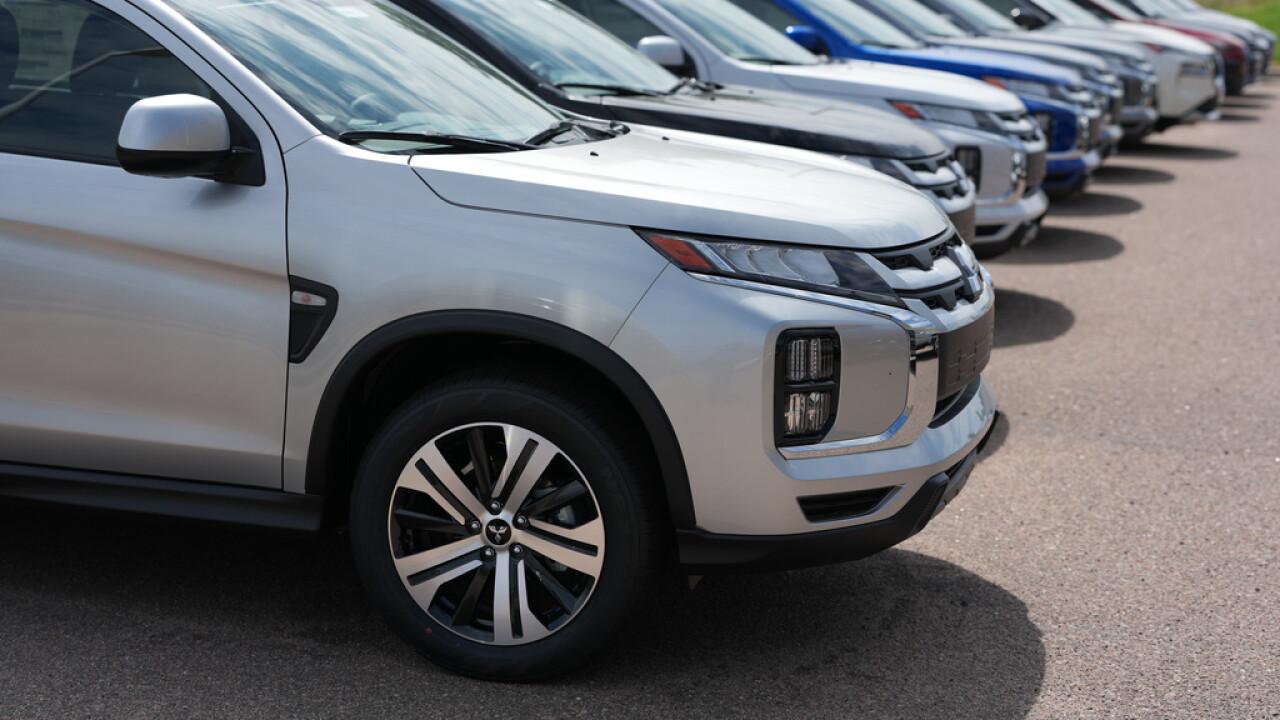


If you've been shopping for a new vehicle lately, you may have noticed something unusual: there aren't many 2027 models on dealership lots.
Typically, dealerships begin filling up with next year's vehicles by early fall. But this year, automakers are taking a slower approach to rolling out their 2027 lineups, a trend that could create opportunities for buyers looking for a deal.
According to CarGurus' August Intelligence Report, about 12% of new vehicle inventory at the end of August consisted of next-generation model-year vehicles. In recent years, next-generation models made up between 22.1% and 25.2% of inventory during the same period.
What's causing the delay?
Kevin Roberts, director of economic and market intelligence at CarGurus, said the slowdown is not related to the semiconductor shortages that disrupted the auto industry in recent years. Instead, some automakers are giving current model-year vehicles a refresh.
RELATED STORY | Interactive: Oil change prices are rising. Is your car affected?
"Some manufacturers are extending out their 2026 model year and going to a 2026.5 model year, which is a little bit of a different concept," Roberts said.
One example is Nissan's 2026.5 Rogue.
Other automakers are delaying model-year transitions as they prepare for major vehicle launches. GMC has introduced a next-generation 2027 Sierra 1500, while Chevrolet has unveiled a next-generation 2027 Silverado. However, both trucks are not expected to arrive at dealerships until later in 2026.
"That's led them to be a little bit later on switching it over to 2027 model year for those makes and models," Roberts said.
Affordability concerns may also be playing a role
The slower rollout comes as automakers navigate the challenge of affordability.
New vehicle sales fell nearly 4% in August compared with the same month last year. At the same time, Kelley Blue Book data shows the average new vehicle sold for $50,089 in August, pushing average transaction prices above $50,000 for the first time since December.
"It could also just be a factor of automakers looking to be really careful about not putting too many 2027s on lots when there already are a lot of 2026s out there," Roberts said.
What it means for car buyers
For consumers, the delayed arrival of 2027 models could translate into better deals on existing inventory.
While discounts are never guaranteed, dealerships often become more aggressive on pricing as they work to clear out older model-year vehicles.
RELATED STORY | Owning a new car now costs more than $12,000 annually amid higher gas prices
"As you get into the fourth quarter, particularly end of year, sales tend to happen in December. We've even started to see it bleed into November with Black Friday," Roberts said.
Financing remains another consideration for shoppers. While the Federal Reserve does not directly set auto loan rates, higher interest rates can make borrowing more expensive, making any buyer discount significantly more appealing.
For buyers looking to purchase a vehicle in the coming months, the slower transition to 2027 models may create an opportunity to negotiate a better price on a 2026 vehicle before the next generation arrives.