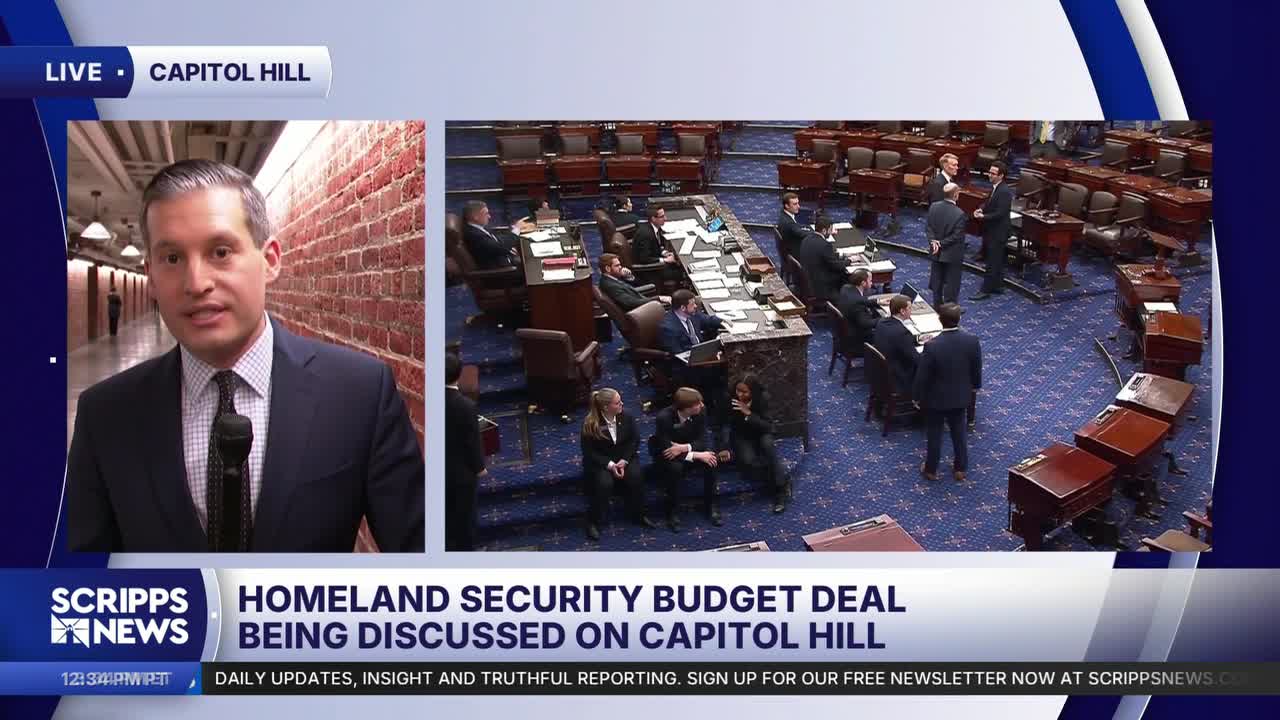


Negotiations to end the partial government shutdown appear to have hit a setback after initially showing signs of progress.
Democrats have blocked funding for the Department of Homeland Security for more than a month over objections to how Immigration and Customs Enforcement is operating.
The lapse in funding has affected several agencies within DHS, including the Transportation Security Administration, which oversees airport security nationwide.
Earlier in the day, a source familiar with the situation told Scripps News that conversations at the White House were ongoing.
RELATED STORY | Senate confirms Mullin to lead DHS amid funding standoff
However, Senate Minority Leader Chuck Schumer indicated Democrats are pushing back on the latest proposal from the White House.
"This does not have any reforms at ICE," he said.
The minority leader added that he will be sending back an offer that would include “significant” reforms to ICE.
While ICE remains a key sticking point in negotiations, DHS says the shutdown is impacting airport operations nationwide.
IN CASE YOU MISSED IT | DHS accused of using surveillance technology to track legal observers
In a statement, acting Assistant Secretary for Public Affairs Lauren Bis said travelers are facing “hours long waits” at airports, with more than 450 TSA officers quitting and thousands calling out sick because they cannot afford basic expenses such as gas, child care, food or rent.
The department said President Donald Trump is deploying hundreds of ICE officers, who are already funded by Congress, to assist at affected airports and help minimize disruptions. DHS reported a TSA callout rate of 10.93% on March 23.
Congress is expected to be on recess for two weeks starting next week, increasing pressure to reach a deal before lawmakers leave town. It is not uncommon for Congress to finalize agreements in the days or even hours before heading back to their home districts for an extended break.