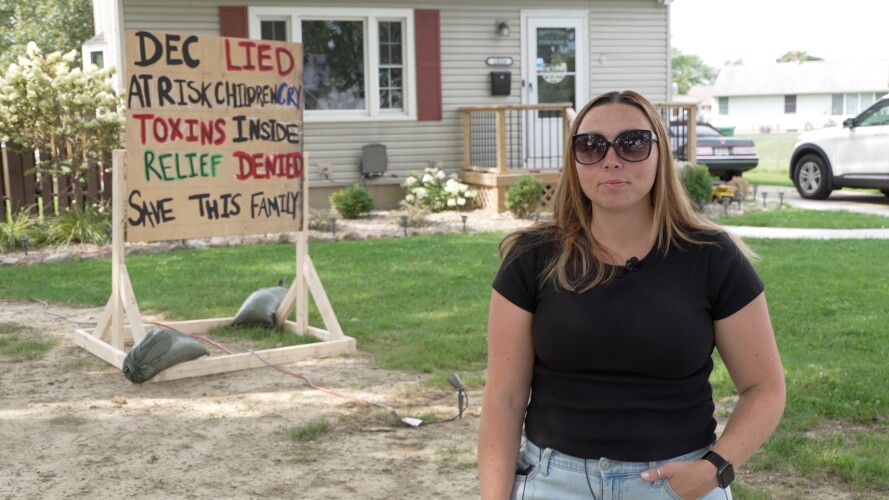


NIAGARA FALLS, N.Y. (WKBW) — A family in Niagara Falls’ Love Canal neighborhood is calling on the state DEC to relocate their family and remediate their property after they found what appears to be industrial waste in their yard.
For a guy moving to Western New York in 2020 from out of state, the Love Canal neighborhood seemed like a perfect fit for Daniel McKiernan at the time.
“Problems with our health started around 2023,” Daniel said. “After our sump pump was installed, we experienced multiple miscarriages, as well as some anxiety and depression, things just coming out of the blue.”
Now married and with three kids, Daniel and his wife Jocelyn think they may have finally found why those problems occurred. While landscaping for a bigger pool, they found countless metal rods and slag in their backyard.
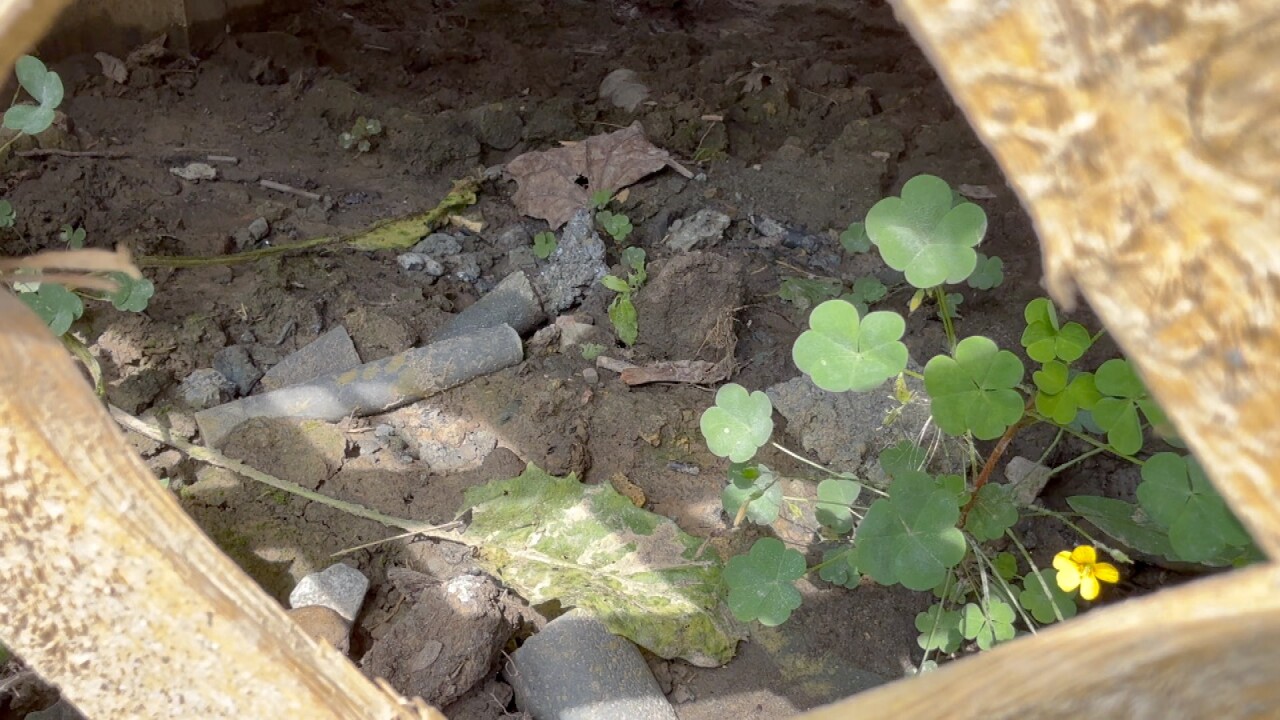
“[Tests found] high levels of lead, copper, iron, nickel, hexavalent chromium. In our sump pump, because that was also tested, we have alpha, beta and gamma BHC. Just lots of chemicals, pesticides and heavy metals,” Jocelyn said.
When the McKiernans got hold of the DEC, they told me that it stopped short of a full remediation.
“He stated that if we wanted it moved, we would have to move it ourselves,” Daniel said.
Daniel excavated what he could of the potentially dangerous material by hand, into a massive pile for the DEC to take away in a truck.

For what he couldn’t get out of the ground, the workers seemingly capped off the yard.
“They put down fabric, and then they put down a mixture of sand, soil and pea gravel,” Daniel said.
A cap, just two weeks old, yet it’s already tearing and washing away after heavy rain.
WATCH: ‘Relocate our family’: Love Canal family finds potentially hazardous materials in backyard
To top it off, the couple received a 1993 study that showed the DEC found the industrial waste byproduct, black ash, in their backyard 33 years ago and only partially remediated a neighboring lot of a now demolished house.
The yard of that now demolished house is now part of their property line, and other confirmed contamination sites like where the pool and kids’ playset now sit were never remediated from the black ash contamination.

“They lied and marketed our home as habitable, and it's clearly not,” Jocelyn said.
“Please refer this to the federal EPA so that people who have experience, who know how to handle this, can make the right decision to relocate our family during a full remedial investigation,” Daniel said.
After I spoke with the McKiernans, the DEC sent me a lengthy statement that is attached in full below.
It says that it is “committed to a full investigation and remediation at the property, although initial data confirms no immediate public health risk.”
The department also added that it now plans to return to their house because of the additional material that was found on the property.
Specific questions about relocating the family were not answered.
The safety and the wellbeing of the family at the 99th Street property is a top priority. New York State is committed to a full investigation and remediation at the property. Although initial data confirms no immediate public health risk, DOH and DEC are continuing the comprehensive analysis and will implement all measures needed to safeguard the family and restore the property.
Following the initial pool excavation, crews acted immediately to begin investigating the fill. DEC then secured contractors to expedite removing the fill and covered exposed areas with protective geotech fabric, sand, and clean fill to preemptively prevent potential exposure to lead or other contaminants while a more detailed investigation takes place. After a more recent notification of fill material beneath the owner’s deck, DEC scheduled removal of the material on Thursday, August 13, weather permitting and if granted access to the property.
Numerous metals and other contaminants, including PCBs, were tested for in DEC’s initial waste characterization and no PCBs were detected. The air monitoring did not indicate any immediate concerns. Results have not yet been validated, which is an essential action prior to determining next steps. DEC and DOH are conducting additional testing of the sump pump contents, indoor air quality, and the homeowners’ yard. The extensive soil sampling program, which will include additional testing for the presence of PCBs, will fully delineate the extent of any remaining fill on the property, analyze soil to assess any potential exposure concerns, and determine future actions. DEC has continued to keep the homeowners informed of all testing results.
While awaiting further test results, DOH has spoken directly with family members to educate on preventative actions to minimize soil contact or tracking of dirt into the home. On August 6, DEC and DOH spoke with the family for almost an hour to relay DOH’s relocation determination and provide other information in advance of the additional testing planned. General lead protection guidance was provided, including good hand washing after coming in contact with any soils and removing shoes or boots when coming into the house, to reduce the possibility of bringing soil into the house.
Elevated lead levels in outdoor soil are often addressed by ensuring grass or other types of barrier cover is in place so that children do not come into direct contact. Actions taken to mitigate risk at this property include removal of the soil containing the elevated lead results from the property and confirming that the remainder of the yard contains a grass cover to act as a barrier to soil contact.
Soil samples collected from the material that was excavated around the above-ground pool installation was tested for contaminants. Lead was detected at elevated concentrations in these excavated materials. DEC removed these materials from the site, placed a protective geofabric down above the disturbed area and covered the area with clean topsoil. Other areas around the exposed excavation around the perimeter of the above-ground pool were also covered with geofabric and clean topsoil.
The family members were advised to keep these protective measures in place and continue to maintain topsoil and grass-covered areas in the rest of the yard to minimize disruption of soils that could contain lead.

Join the Niagara County Community News Facebook group to connect with neighbors and learn about what's happening in your community.