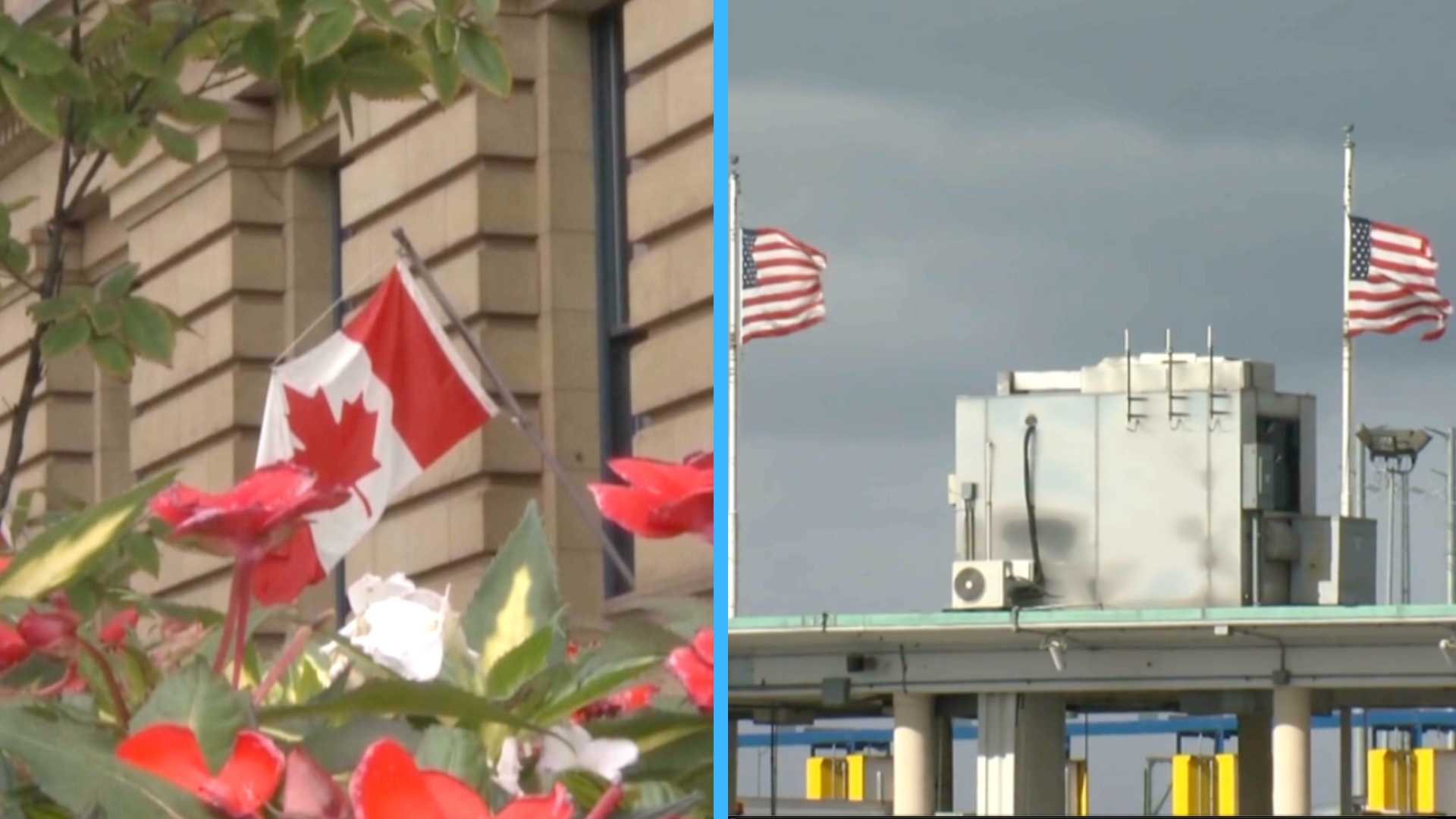


BUFFALO, N.Y. (WKBW) — The trade war between the United States and Canada is escalating, and Western New York is caught in the middle.
Canada announced Tuesday that it will impose 50% tariffs on about $20 billion worth of American goods beginning next month, retaliating against President Donald Trump's new 50% tariffs on a similar amount of Canadian products.
Canadian Finance Minister François-Philippe Champagne said the tariffs will have “real consequences” for Canadian workers, businesses and communities, but said Canada must respond.
The move comes amid increasingly heated rhetoric between the two countries.
Ontario Premier Doug Ford expressed his anger at President Trump, saying he would not respond to a “dictator” or “bully” and using profanity to describe his feelings toward the president.
U.S. Trade Representative Jamieson Greer, meanwhile, downplayed the potential impact of Canada's retaliation, saying the vast majority of goods traded by small businesses are either made in the United States or already duty-free.
But local manufacturing leaders say uncertainty surrounding the tariffs could be damaging.
Peter Ahrens, executive director of the Buffalo Niagara Manufacturing Alliance, said local manufacturers are concerned about constantly changing tariff policies and the possibility of further escalation.
“Manufacturing is a very capital-intensive business,” Ahrens said. “If you have a lot of variation in tariffs — they're on one day, they're off the next day, or what's going to be the next tariff — it's going to stymie business investment.”
Ahrens said Western New York manufacturers generally oppose the tariffs and the continued escalation of the dispute.
President Trump has argued that tariffs will encourage manufacturing companies to bring jobs back to the United States.
WATCH: WNY & Southern Ontario leaders react to escalating trade war
On social media, Trump called Canada “entitled” and “unreasonable” and even floated the idea of renaming Lake Ontario "Lake America."
Democrats criticized the president's comments. Rep. Tim Kennedy, a Democrat from Buffalo, called Trump "a petty, vindictive, failed president."
Meanwhile, Rep. Nick Langworthy, a Republican who represents suburban and rural parts of Western New York, said Canada has not done enough to open its markets to American products, including dairy from farmers in his district.
“Canada is an important ally,” Langworthy said in a statement. “But friendship is a two-way street. We need a fair deal that strengthens both nations and delivers for American workers and farmers.”
Across the Niagara River, Niagara Falls, Ontario Mayor Jim Diodati said Canadians are frustrated by the escalating dispute.
“I think we're kind of hurt,” Diodati said.
He argued that the United States and Canada already had a free-trade agreement — one negotiated by the Trump administration during the president's first term — and said the current dispute is especially troubling for communities along the border.
“Canadians love Americans. We love the USA, and I know the relationship goes the other way,” Diodati said. “This is politics right now. That's all that it is.”
Diodati said the economic ties between Niagara Falls and Western New York make the consequences of a prolonged trade dispute particularly serious.
“Our economies are tied together,” he said. “Our cities are branded as one. Most people in the world don't realize there are two.”
The Niagara Falls mayor said the region's four international border crossings handle roughly 10 million cars and 2 million trucks each year, representing billions of dollars in commerce between Canada and Western New York.
Despite the escalating rhetoric — and Trump's threats of additional tariffs on Canadian automobiles and steel — Diodati told 7 News' Michael Wooten that he remains optimistic that the two countries will ultimately reach a deal.
“I’m always optimistic, Michael, that we're going to come to terms, and there's going to be an 11th-hour deal,” Diodati said.
He compared the negotiations to a baseball game, saying he hopes someone eventually “bangs one out of the park” for both countries.
Diodati said the United States has more leverage because of its larger economy, but he does not expect Canada to back down.
And, he said, the consequences of a prolonged trade fight will be felt on both sides of the border.