

BUFFALO, N.Y. (WKBW) — As Ukraine prepares to mark 35 years of independence from the Soviet Union, the country remains locked in a war with Russia that has devastated communities and strained its health care system.
For Dr. Stephen Kineke and registered nurse Ann Schwanda of Western New York, the war is something they have experienced firsthand.
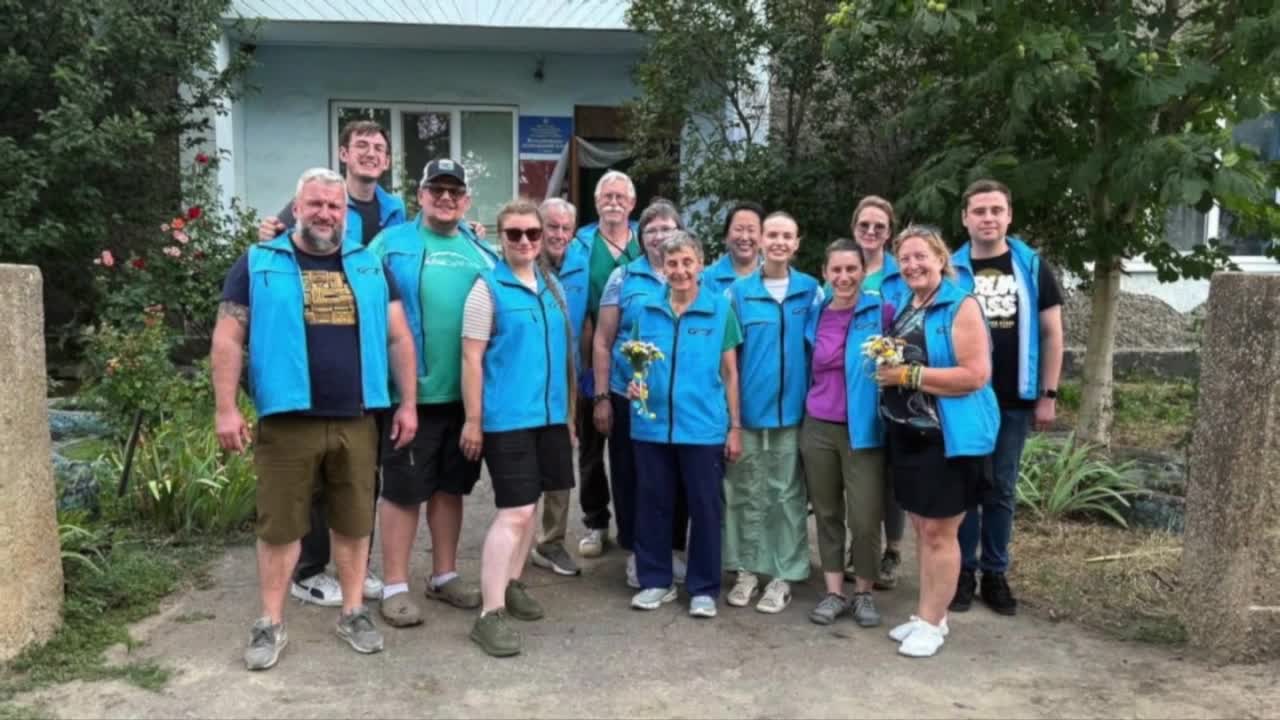
The husband-and-wife medical team recently returned from another trip to Ukraine with Global Care Force, a nonprofit that sends medical teams to communities where people have limited access to health care.
During the latest mission, Kineke, Schwanda and their fellow volunteers visited 15 clinics and treated more than 1,000 patients.
The communities they visited included villages that have been damaged by Russian attacks.

“This was an exploded drone as we were driving back from the clinic,” Kineke said, describing one of the dangers they encountered.
The couple said the human toll of the war is difficult to comprehend.
“It is horrible for them. They're up all night with missile attacks,” Schwanda said. “It's much worse than it has been in the past.”
But the war's impact extends beyond the major cities.
In some rural communities, residents may have to travel an hour or more to reach a hospital or medical clinic. Many local health care providers have left the area to serve in the military or have otherwise relocated.
Schwanda said the lack of primary care means the Global Care Force volunteers sometimes have to improvise.

“These people get no primary care. There are no clinics in these places,” she said. “We're seeing people in grocery stores and ... community centers and on their lawns.”
Dr. Kineke said that for some residents, traveling to a distant hospital, paying for transportation and obtaining medicine could consume much of their monthly pension.
“If Global Care Force did not take on this mission, these people would have no care at all,” Schwanda said.
The couple also told stories of Ukrainian health care workers who have continued caring for patients despite the dangers.
In one village, they met an EMT who is the only medical professional in her community.
During Russian occupation, the woman secretly traveled from house to house at night to provide medical care.
Dr. Kineke said the dedication of Ukrainian medical workers puts the volunteers' own efforts into perspective.
“Seeing people like that, and the sacrifices that they make to take care of their patients, it makes what we do ... pale in comparison,” he said.
The couple said they can see the impact of their work in the reactions of the people they treat.
Schwanda recalled one woman who went home after receiving care and returned with bouquets she had made for the medical providers who had worked with her that day.

For Dr. Kineke and Schwanda, the mission is about more than providing medical care. They also want Ukrainians to know they have not been forgotten.
“Going back multiple times, we want to let the people know that they're not forgotten,” Kineke said. “That their suffering is important to us.”
The couple said they plan to return to Ukraine again next spring.
They have paid as much as $6,000 each out of their own pockets to make previous trips, in addition to volunteering their time.
They are encouraging people who want to help provide medical care in Ukraine to support Global Care Force.