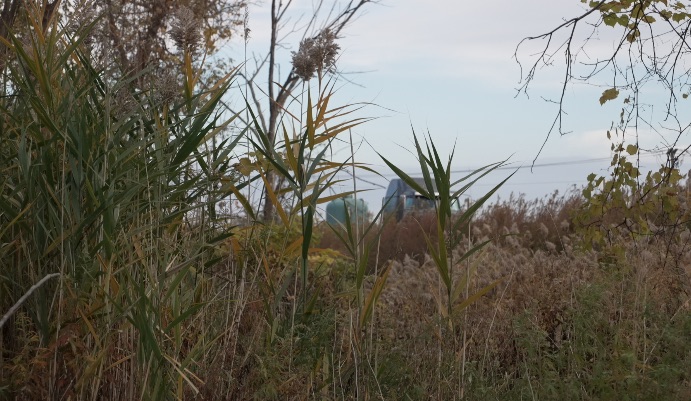


WEST SENECA, N.Y. (WKBW) — Residents along Covington Drive say the noise from the New York State Thruway has become a constant disruption, and they want sound barriers installed to help bring some peace and quiet back to their neighborhood.
Residents say the removal of mature trees behind their homes has left them with a clearer view of the highway and less of a buffer from traffic noise.
“You didn't actually even see the Thruway before, and now, you can not only see it, but it's much louder as well,” Connie Scioli said.
The trees were removed by National Fuel for maintenance, according to residents.
They say the highway noise is now difficult to escape, even at home.
“It's a constant flow of traffic,” Connie Scioli said.
For some neighbors, the noise is more than an annoyance.
“It's nonstop, all the time. It shakes the house, it wakes the kids up,” Brianna Kaitanowski said, describing the sound of trucks passing by.
Residents say the problem is particularly noticeable during warmer months, when they open their windows or try to spend time outside.
“In the winter it's not as bad because we have our windows closed, but in the summer, forget it,” Barb Sonnenfeld said.
WATCH: West Seneca residents want sound barriers as Thruway noise disrupts neighborhood
Residents are asking for permanent sound barriers along the highway to help reduce the noise reaching their homes
However, a New York State Thruway Authority spokesperson says it does not currently have a project planned near Covington Drive that would require sound testing, a noise study or noise abatement.
The authority follows federal highway traffic noise regulations and the New York State Department of Transportation's Noise Analysis Policy.
Those standards identify the types of highway projects that must address noise impacts and when noise abatement measures are required.
The Thruway Authority says the policies are applied consistently across its 570-mile system. It also says it has responded to residents who contacted the agency about noise walls and provided them with information about its traffic noise policy.
The Thruway between Rochester and Buffalo opened in 1954, decades before federal highway traffic noise regulations were established.
For residents who do not qualify for a noise study or sound wall, the authority says other options may be pursued on private property. Those measures would need to comply with applicable federal, state and local laws and regulations.
West Seneca Supervisor Gary Dickson told WKBW the town plans to conduct a noise study.
Residents hope the study will help bring attention to the issue and lead to a solution, including the installation of permanent sound barriers.
For now, they say the steady stream of traffic remains a constant presence just beyond their backyards.