

HOLLAND, N.Y. (WKBW) — It's that time of year when baby birds and other young animals are showing up in yards and parks — and well-meaning people are picking them up when they shouldn't be.
Experts at the Messinger Woods Wildlife Care and Education Center in Holland say the most important thing people can do is leave young wildlife alone and call for guidance before intervening.
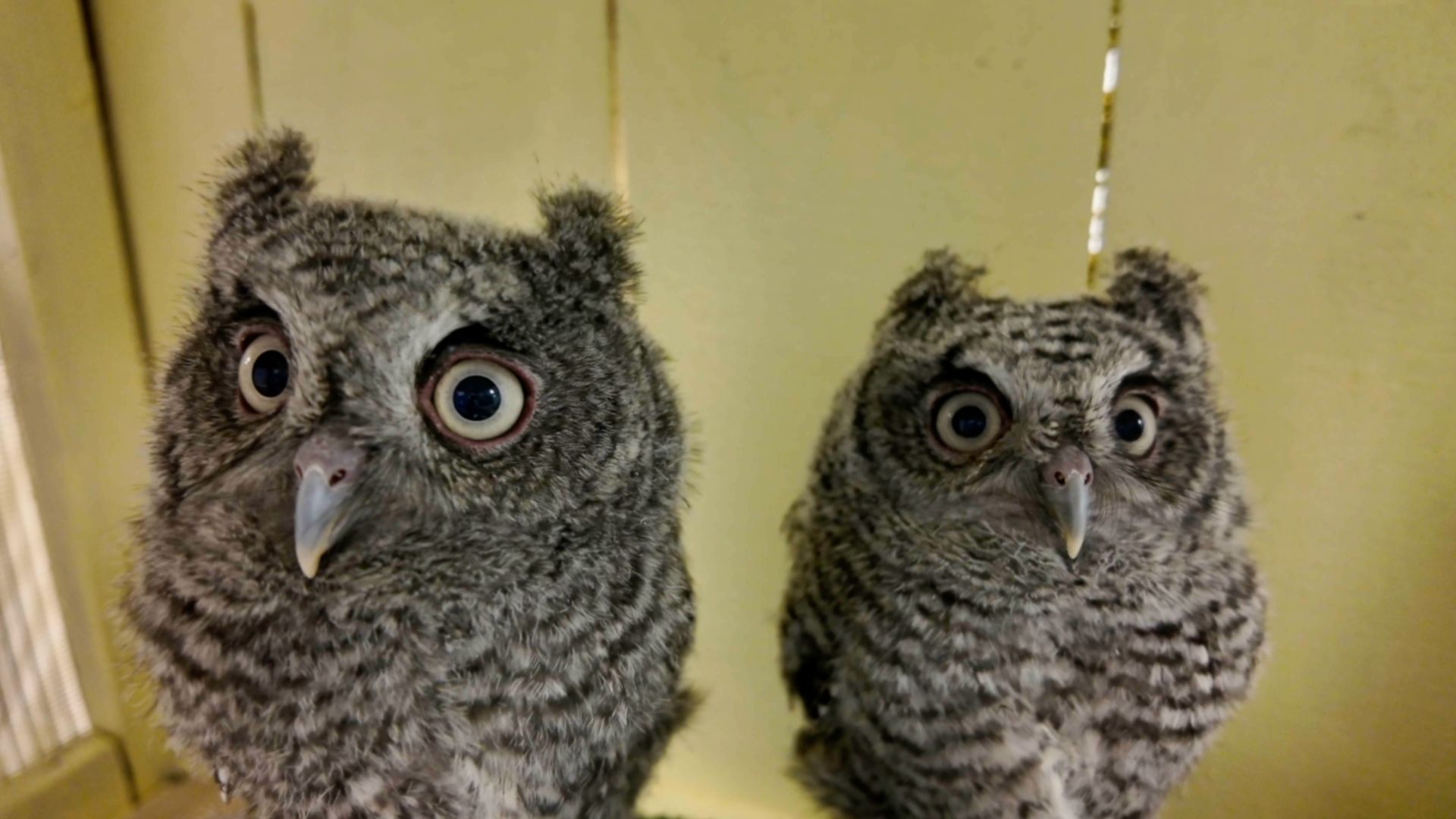
Marianne Hites, a volunteer, is currently caring for a pair of baby owls that had to be rescued after the tree they were nesting in was cut down. But she says that kind of intervention is the exception, not the rule.
"Baby owls... this time of year... they're getting ready to leave their nests or have already left their nests. Their parents are saying it's time for you to learn how to fly. You need to get out there on your own and go, and they leave the nest and they're just hopping down the branches. All the way down to the ground, the parents are very close by. People don't understand that. Please don't take them, bird," Hites said.
WATCH: Messinger Woods Wildlife Care and Education Center volunteers offer tips for taking care of wildlife
Hites and another volunteer, Jen Reisdorf, offered guidance on how to tell when a young animal actually needs help.
"If it does not have feathers, it's not ready to be out of the nest yet. Maybe it just fell out or something like that. Try to re-nest them if you can. That's the best thing. They are best with their mothers always," Reisdorf said.
Reisdorf also noted that baby birds hopping on the ground are often in the natural process of learning to fly and should be left alone.
"If they're on the ground hopping around, they're just going to come back out. So leave them alone. Watch for the parents to be caring for them. Stand back at a distance, watch for the parents to be caring for those baby birds, and they should be fine," Reisdorf said.
The same principle applies to baby rabbits. Hites said the center receives calls from people who believe they've found orphaned bunnies when the animals are actually fine on their own.

"Typically, people would see them out in the wild and think that they need help. They're hopping out at that age during the day, but they really belong back in the nest. People are calling us telling us they have an orphaned bunny, and they do not," Hites said.
Staff at Messinger Woods say the desire to help is understandable, but acting on instinct can do more harm than good.
"People want to help, right? What are ways people can actually help? Leaving the animals alone, leaving them alone and calling for help first, that's the biggest thing. You don't want to steal them from their parents. If we can save them at all and keeping them with their parents, that's the most important part," Hites said.
Anyone with questions about a young animal they've found can call the Messinger Woods Wildlife Care and Education Center hotline at 716-345-4239.
This story was reported on-air by a journalist and has been converted to this platform with the assistance of AI. Our editorial team verifies all reporting on all platforms for fairness and accuracy.