


BUFFALO, N.Y. (WKBW) — A surge in Erie County residents seeking rabies vaccinations has health officials urging people to take encounters with bats and other wild animals seriously.
The Erie County Department of Health approved post-exposure rabies vaccinations for 150 residents in July, more than double the number approved in any previous July in recent years.

Health Commissioner Dr. Gale Burstein says the increase in July could reflect more potential exposures, greater public awareness or a combination of both. And exposures normally peak each year in August.
“We expect we'll receive more calls,” Burstein said. “But we're prepared.”
WATCH: Rabies shots surge in Erie County as bat encounters increase
Buffalo couple finds bat in bedroom
J. Dale Shoemaker and his fiancée, Adrienne Boudreau, learned about the risk firsthand. They were asleep in their West Side apartment earlier this week when a pet woke them up.
“Our cat was kind of going nuts in the bedroom, and there was like a weird buzzing noise,” Shoemaker said.
They initially went back to sleep. Hours later, they realized what had disturbed them.
“I hear her scream, ‘a bat,'" Shoemaker said. “And so we just kind of went into action mode.”
Shoemaker eventually trapped the bat and released it. It was only afterward that he learned he should have captured the animal and brought it to the health department for testing.
“If it's negative, you don't have to get the shots, but if it's positive, then obviously you do,” Shoemaker said.
Because the bat was no longer available for testing, Shoemaker and his fiancée decided not to take any chances. They went to Erie County Medical Center to receive post-exposure rabies vaccinations.
Shoemaker, a reporter with Investigative Post, said the experience changed his understanding of how serious a potential rabies exposure can be.
“I texted my father, and he was like, ‘Don't worry about it, you're fine,’” Shoemaker said. “And then we called the health department and they're like, well, actually this is pretty serious.”
Shoemaker said he and his fiancée ultimately decided it was better to err on the side of caution.

“We're getting married in a month and I would really like to begin my life with my fiancée, my soon-to-be wife, and I would prefer that neither of us die anytime soon,” he said. “So we decided to play it safe.”
Rabies is deadly — but preventable
Dr. Burstein emphasized that rabies should never be taken lightly.
“The overarching message is that rabies is 100% fatal,” Dr. Burstein said. “If you end up getting the disease, it's a progressive neurologic disease, and there is no cure for it.”
Once symptoms develop, treatment is generally no longer effective. But rabies is preventable when people receive appropriate post-exposure treatment before symptoms begin.
“The good news is that rabies is 100% preventable with the vaccines,” Burstein said.
The recent increase in vaccinations is significant.
The Erie County Department of Health approved rabies post-exposure vaccinations for:
- 150 people in July 2026
- 72 people in July 2025
- 66 people in July 2024
- 57 people in July 2023
The July 2026 total was more than twice the number recorded during any previous July in recent years.
Burstein said it is too early to determine exactly why the numbers are rising.
“We don't know if the increase is because there's more exposures or there's more people aware and then so they're calling,” she said. “It's probably a combination.”
Bats aren't the only concern
Bats are a significant source of rabies exposure, but health officials also warn residents to avoid contact with other wild mammals, including raccoons, skunks and other animals. Burstein said a woodchuck even tested positive for rabies in Erie County this year.
Health officials also stress that bats themselves are an important part of the ecosystem.
“Bats are good for the environment,” Dr. Burstein said. “They eat the mosquitoes that are very annoying and can give us West Nile virus. But we don't need them in our house.
Shoemaker agreed.
“I'm pro bat,” he said, “just not in my bedroom, please.”
What to do if you encounter a bat
If a bat gets inside your home, you should not release it if there's even a slight chance a person or pet was exposed to the wild animal. Instead, you should contact your local health department for guidance and, when possible, safely capture the bat so it can be tested for rabies.
The New York State Department of Health has also published guidance on safely capturing a bat.
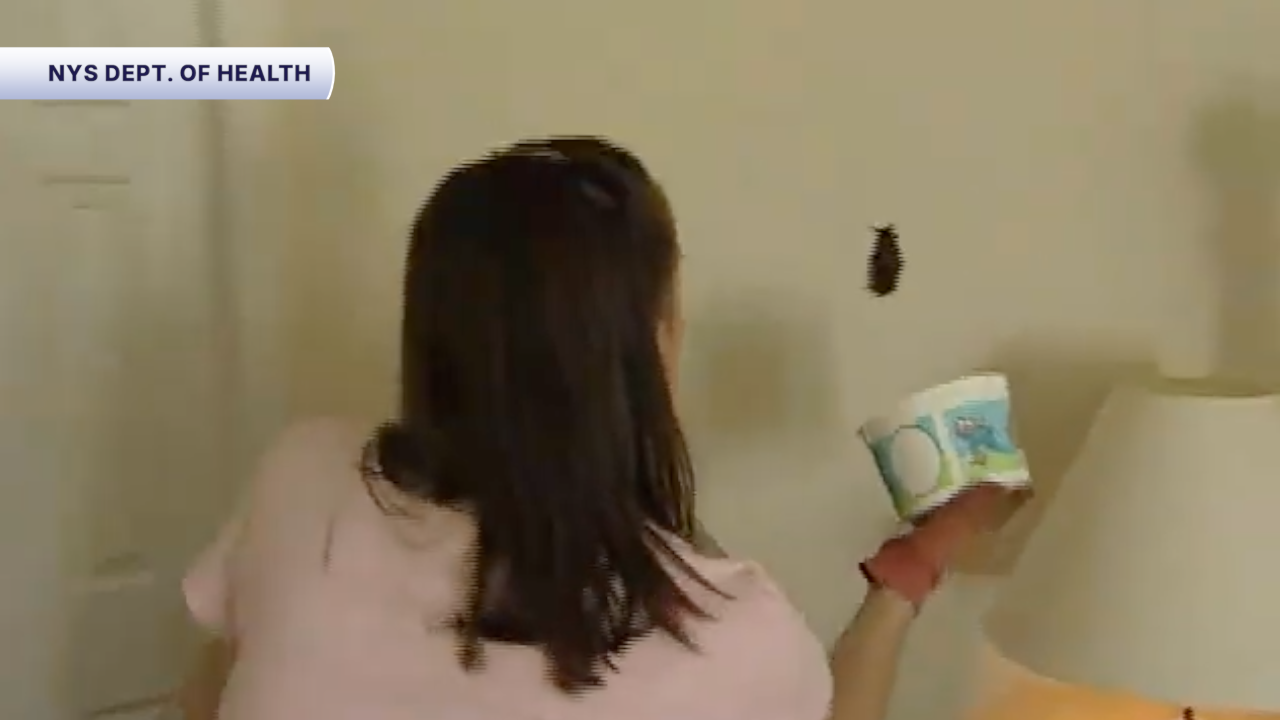
If a person or pet has had contact with a bat or another wild animal, health officials say it is important to contact the health department promptly to determine whether rabies post-exposure treatment is necessary.
County working to vaccinate pets and wildlife
Erie County is also taking steps to reduce the spread of rabies among animals, working with the U.S. Department of Agriculture to distribute oral rabies vaccines to wildlife in wooded areas.
The county also holds large-scale rabies vaccination clinics for pets.
“These are massive clinics. They're drive-through clinics,” Burstein said. “Our last clinic in May, we vaccinated about 900 animals in four hours.”
The next Erie County rabies vaccination clinics are scheduled for Sept. 12 in Cheektowaga and Sept. 19 in Hamburg.

Residents can visit the Erie County Department of Health's website for information and registration.