

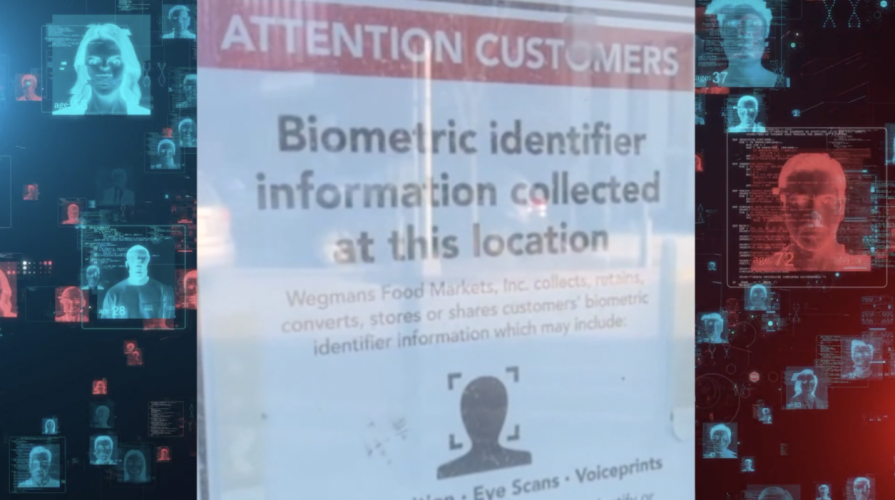

BUFFALO, N.Y. (WKBW) — Erie County legislators Lawrence Dupre (D) and Lindsay Lorigo (R) have proposed a law that would require entities to inform the public if biometric data is being collected.
WHAT IS BIOMETRIC DATA?
Biometric data is a unique security approach to scan and measure biological and behavioral characteristics. It can identify people in a large crowd by:
• Facial recognition
• Fingerprints
• Voice
• Retina or iris scans
• Hand scans
• Any biological or physical trait used to identify a person
Dupre and Lorigo wrote their own versions of the law, which are slightly different. Both aim to do two main things: require places to warn you when biometric data is being collected, and to keep any entity from ever selling that data.
On Thursday, it was tabled in the Erie County Legislature to be discussed further with technology experts.
"We both don't think it's okay for a store to just do it without our notice," Dupre said."We're not saying you shouldn't do it, that's the store's prerogative."
"When you start telling companies what they can and can't do to prevent theft for security purposes," Lorigo said. "I think that's a sticky situation. I think letting customers know that the data is being collected is really where we should stand on this; consumers should be made aware."
WATCH: Erie County legislators propose law to protect consumers from biometric data collection
WEGMANS USAGE
Wegmans confirmed to 7 News at the beginning of the month that it is using facial recognition technology at what it calls "elevated risk" stores. Wegmans said this technology is being used as security to protect customers, staff and their stores. Wegmans won't specify which locations qualify or what makes them higher risk.
Lorigo and Dupre said this law is nothing against Wegmans, but a law that would require places in Erie County to warn customers when it's being used. Wegmans in New York City has signs telling customers about the technology, because they enacted a law. Erie County wants to do the same.
WATCH: What retailers are using biometric facial recognition technology
WHAT THE LAW WOULD DO
Lorigo and Dupre said they're working together on bipartisan legislation to publish the best version of the law possible. The law would require businesses that collect biometric data to post clear signs to warn customers at entrances.
It also prevents businesses from leasing, trading, selling, sharing or profiting from this data in any way.
Dupre's version of the law exempts government agencies and financial institutions. Both call for fines of up to $5,000 if this law isn't followed multiple times.
WEGMANS STATEMENT
"At Wegmans, the safety of our customers and employees is a top priority. Like many retailers, we use cameras to help identify individuals who pose a risk to our people, customers, or operations. In a small fraction of our stores that exhibit an elevated risk, we have deployed cameras equipped with facial recognition technology. In New York City, we comply with local requirements by posting the mandated signage to notify customers about the technology.
This technology is solely used for keeping our stores secure and safe. The system collects facial recognition data and only uses it to identify individuals who have been previously flagged for misconduct. We do not collect other biometric data such as retinal scans or voice prints. Images and video are retained only as long as necessary for security purposes and then disposed of. For security reasons, we do not disclose the exact retention period, but it aligns with industry standards. Persons of interest are determined by our asset protection team based on incidents occurring on our property and on a case-by-case basis, by information from law enforcement for criminal or missing persons cases. We do not share facial recognition scan data with any third party.
We understand concerns about fairness and bias in facial recognition systems. We employ a multitude of training and safety measures to help keep people safe. Facial recognition technology serves as one investigative lead for us. We never base our decisions on a single lead alone. Our goal is simple - to keep our stores safe and secure."
WATCH: E.P.I.C calls for national biometrics surveillance ban
Lorigo said once they hear from experts on this, there will be a public hearing and then a vote.