

BUFFALO, N.Y. (WKBW) — New soil sample results from Buffalo's East Side show lead contamination levels three times higher than what the Environmental Protection Agency (EPA) considers safe for everyday contact, with more than 90% of tested properties exceeding EPA standards.
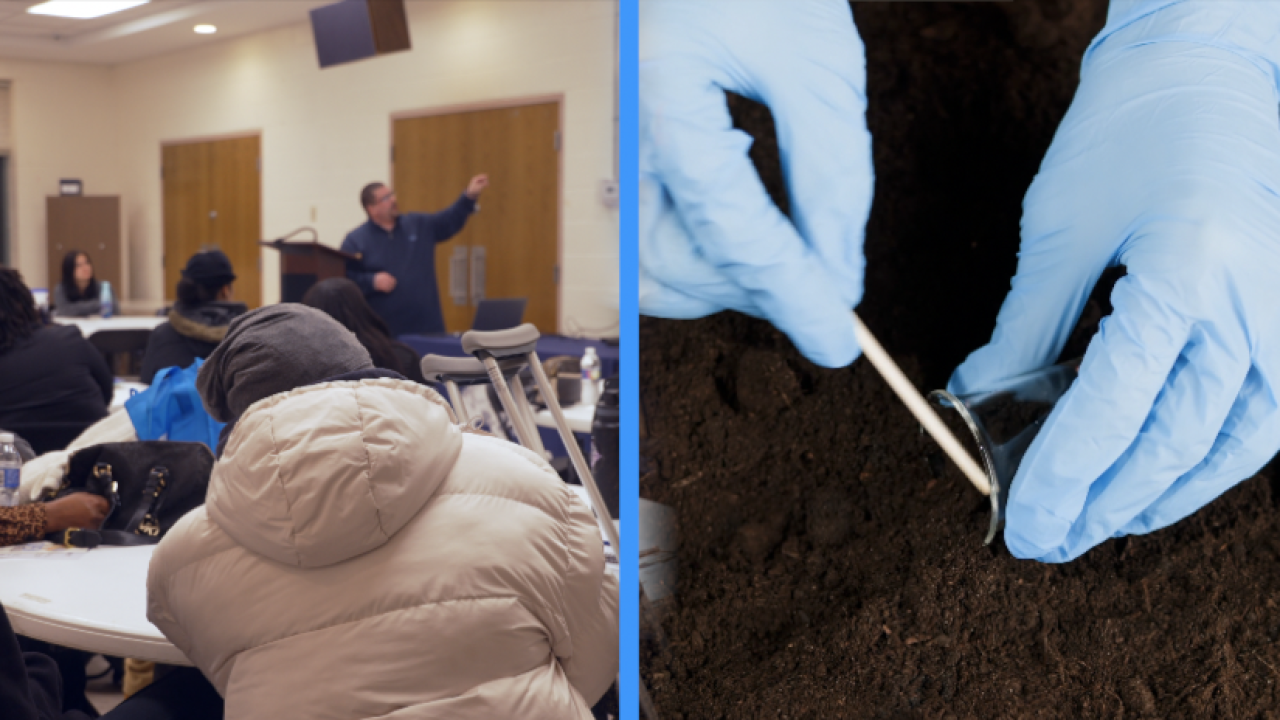
The concerning results were discussed Monday night at the Delavan Grider Community Center, where experts with Open Buffalo outlined next steps to protect residents from the dangerous lead levels found in Buffalo's East Side neighborhoods. Also, ways for the community to chime in on generating solutions.
WATCH: Open Buffalo soil testing shows dangerous lead levels in East Side neighborhoods
Lead is measured in parts per million (PPM). While the U.S. Environmental Protection Agency recommends a lead level limit of 200 PPM as safe, a recent study through Open Buffalo found much higher concentrations.
"Once you get between 200 and 400 parts per million, you have to start to take some precautionary measures. Above 400, it's much more dangerous, and the average on the East Side where we studied was 642 parts per million," said Jim Golden, ecological justice director with Open Buffalo. "We went to 3,500 different homes and we asked people to participate. If they said yes, we went and we used the data collection procedures that are actually by the Environmental Protection Agency," Golden said.

Deputy Director Max Anderson explained that lead can enter soil possibly through home demolitions.

"Many of them were demolished in a style that just knocks the building into its foundation and they cover it up with dirt or with soil, so all those materials that were once in the house that was standing could now be beneath our feet in the soil or in the ground," Anderson said.
Fruit Belt resident Dennice Barr found the results alarming.

"We don't have enough of that and so I applaud Open Buffalo for even trying, but it's going to be on the residents as well as on City Hall to try to get a momentum going so that we can get the help we need," Barr said. "To know that I have over 600, I thought that was high. That was very disturbing, but to hear that there are neighborhoods that have much more than that, that's very disturbing."
Open Buffalo Executive Director Franchelle Parker said there are potential solutions to remediate the contaminated soil.

"Depending on how contaminated the soils are, there are trees that extract heavy metals that can be planted in neighborhoods. There are plants such as hemp, mycelium and sunflowers," Parker said.
Open Buffalo plans to release the full report from its study early next year, which will share additional solutions for residents.