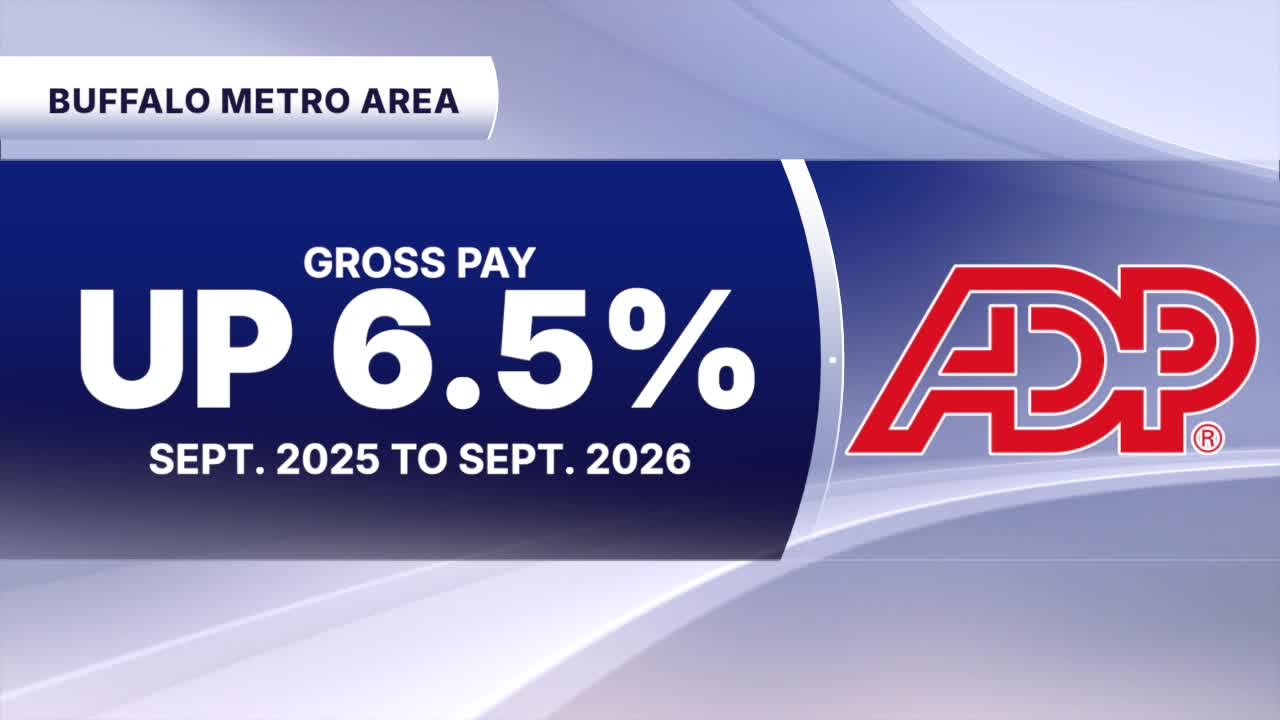


BUFFALO, N.Y. — Overall pay is growing faster in the Buffalo area than in any other major metropolitan area in the country, according to the latest data from payroll processing company ADP.
The company's September report found gross pay in the Buffalo metro area increased 6.5% year-over-year, compared with 4.7% nationally.
The Buffalo area ranked first among the 56 largest U.S. metropolitan areas tracked by ADP for gross pay growth.
The numbers come as employers across Western New York continue to compete for workers with in-demand skills, something illustrated at a career expo this week sponsored by the University at Buffalo School of Management.
"There were so many employers there, and there's been prior years where no one is hiring, right?" said Dr. Scott Laing, a clinical assistant professor of finance at the U.B. School of Management. "Or they show up and they say, we don't really actually have any opening positions. So there's a lot of hiring actually going on."
Job changers driving much of the growth
ADP lead data scientist Liv Wang said a significant portion of the pay growth is coming from people who have changed jobs.
"Job changers, they get a chance to reset and negotiate based on their expectations for the one-year term," Wang said.
For workers, the 6.5% increase in gross pay is particularly notable because it is outpacing inflation.
"Being able to have wages beat inflationary pressures when inflation is so crazy right now due to the energy crisis, for instance, that's a great story for Western New York," Laing said.
But he noted an important distinction in the ADP numbers.
Base pay isn't keeping up with inflation
ADP's measure of gross pay includes overtime, bonuses, commissions, tips and other compensation. Base pay, on the other hand, represents a job's regular pay rate, whether that be hourly or salary.
"Changes in base pay tend to be long-lasting rather than temporary," ADP says in its technical notes on the report. "As such, base pay tracks trends in structural wages."
Base pay only rose 3.3% in the Buffalo metro area year-over-year in September, slightly above the national average of 3.2%. The latest Consumer Price Index showed yearly inflation at 3.4%.
Government jobs data coming Friday
The ADP report measures payroll data from private-sector employers. A separate look at wages will come from the federal government Friday, when the latest jobs report is released.
That report will include data on average hourly earnings, allowing for another look at whether workers' pay is keeping pace with rising prices.
Last month, government data showed real wages — earnings adjusted for inflation — declined slightly.