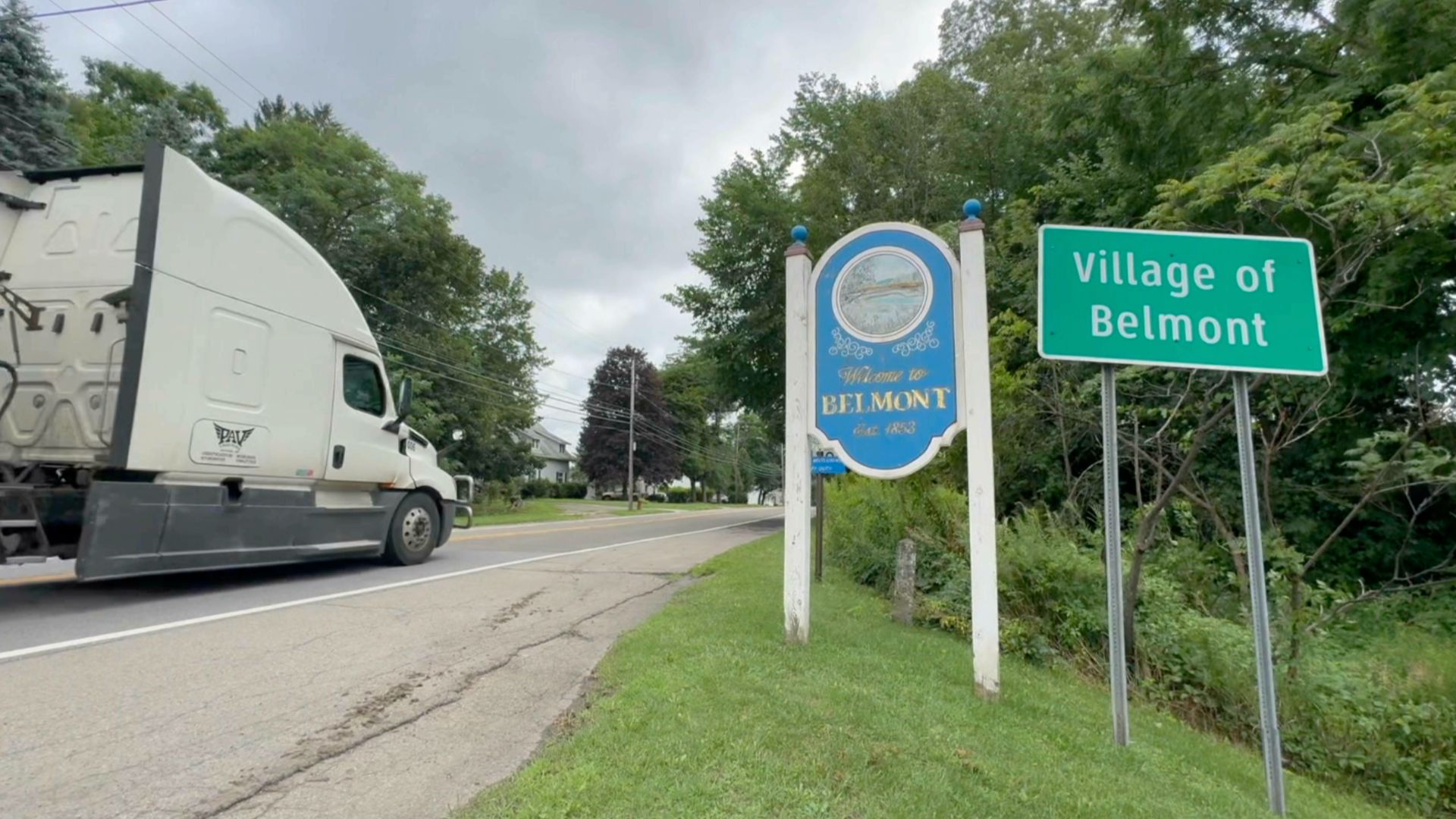


BELMONT, N.Y. (WKBW) — The Allegany County Department of Health has identified a confirmed case of measles in an unvaccinated resident of Belmont, while monitoring others who were in direct contact with this person.
According to a department release, the infected individual had recently traveled to Ohio. That state's Department of Health reported the state’s third measles outbreak this year. That outbreak includes four infected individuals: three in Ashtabula County and one in Tuscarawas County.
However, Allegany County's Health Department did not specify where the Belmont resident had been traveling in Ohio.
"To date, 23 direct contacts have been identified through contact tracing and have been provided information and guidance," the department wrote in its release. "The Health Department has notified other community and health care partners to place them on high alert."
"The overall risk of measles to the general public remains low, particularly for individuals who are fully vaccinated against the disease. However, measles is extremely contagious, and anyone unvaccinated, pregnant, under 12 months of age, or immunocompromised is at a higher risk and should talk with their health care provider," the release added.
The Allegany County Department of Health declined an interview request with WKBW. However, Chief of Infectious Diseases at the Buffalo VA Medical Center, Dr. Thomas Russo, shared further insight on the risk of measles.
"One of 20 individuals that get measles will develop pneumonia. 1 in 1000 individuals who get measles will develop inflammation of the brain or encephalitis. And 1 to 3 out of 1000 individuals that get measles will actually suffer a bad outcome and die," Russo told WKBW. "We're seeing an increasing number of measles cases in this country over the last few years. We've had more cases this year than the previous year, and there's still quite a bit of this year left."
According to the CDC, as of July 30, 2026, 2,371 confirmed measles cases were reported in the United States this year. There have been 37 new outbreaks reported in 2026, and 94% of confirmed cases (2,219 of 2,371) are outbreak-associated (846 from outbreaks starting in 2026 and 1,373 from outbreaks that started in 2025).
"The communities that are suffering from measles are almost all religious communities that just don’t vaccinate," Kennedy told Bash.
A Mennonite community was one focus of an outbreak that began in West Texas last year. But the virus quickly spread among unvaccinated people outside that group, eventually reaching almost 800 cases, including the deaths of two children, before the outbreak was declared over.
"I’ve never questioned the efficacy of the MMR vaccine," he said.
But in March 2025, as the outbreak in Texas spread to New Mexico and Oklahoma, he told Fox News’ Sean Hannity that measles outbreaks could be driven in part by people who have waning immunity from the vaccine.
"When you and I were kids, everybody got measles, and measles gave you … lifetime protection against measles infection. The vaccine doesn’t do that. The vaccine is effective for some people for life, but for many people, it wanes," Kennedy told Hannity.
Dr. Russo says that vaccines remain the best way to combat measles.
"If you've been vaccinated with both doses of the measles vaccine, your level of protection is quite high, and the likelihood of you getting infected is extremely low, and even if you do get infected since the vaccine is not perfect, you're likely not to have severe disease." Russo continued, "However, for those individuals that do not have protection through vaccination, it is critical to identify you've been exposed because those individuals can be protected by within the first 3 days of exposure getting the measles vaccine and certain individuals that are not eligible for vaccination, that have not been, vaccinated as of yet, such as pregnant women or immunocompromised individuals could get a measles immunoglobulin."
WATCH: Allegany County health officials confirm first measles case in Belmont
According to the NY State Department of Health, 77.3% in Allegany County have received at least 1 MMR dose by 2 years of age as of January 1 of this year.
"Overall in New York State we have a very high vaccination rate. It exceeds that 95% threshold to achieve herd immunity," Russo said. "Unfortunately, we have a number of pockets of individuals that have not been vaccinated that are well below that critical percentage of vaccination."
"Measles is extraordinarily infectious, so if measles gets into the community with less than optimal vaccination rates, it will spread quite readily. It'll find those individuals that have yet to be vaccinated."
The Allegany County Department of Health recommends the following:
1. Check Your Immunity / Vaccination Status
You are generally considered immune to measles if you meet one of the following criteria:
- You have documented records of receiving two doses of the Measles, Mumps, and Rubella (MMR) vaccine.
- You were born before 1957.
- A healthcare provider has previously confirmed through a blood test that you are immune.
If you are fully vaccinated, your risk of contracting measles is very low. Unvaccinated individuals, young infants, pregnant women, and immunocompromised individuals are at the highest risk for severe complications. If you have symptoms or someone has notified you of an exposure, limit your activity outside of your home and with others.
2. Monitor for Symptoms for 21 Days
If you were exposed or think you were exposed, monitor yourself and your family members for symptoms. Early symptoms typically appear 7 to 14 days after exposure and include:
- High fever (often rising above 101 degrees F)
- Cough
- Runny nose (coryza)
- Red, watery eyes (conjunctivitis)
Subsequent symptoms:
- A red, blotchy rash typically appears 3 to 5 days after initial symptoms begin, usually starting on the face along the hairline and spreading downward to the rest of the body.
3. Post-Exposure Options (Act Quickly)
If you are unvaccinated, pregnant, or immunocompromised AND were exposed, contact your health care provider or ACDOH right away.
- The MMR vaccine given within 72 hours of exposure, or immune globulin (IG) given within 6 days, can prevent or reduce the severity of measles illness.
4. Call Ahead Before Seeking Medical Care
DO NOT walk into a clinic, urgent care, or emergency room without calling first.
If you develop symptoms or suspect you were exposed, call your primary care provider or the Emergency Room before arriving. Inform them that you may have been exposed to measles. This allows healthcare facilities to take precautions—such as placing you in an isolated room immediately—to prevent spreading the virus to other vulnerable patients in the waiting room or other areas.
For questions regarding this public notice or measles vaccination, contact the Allegany County Department of Health at 585-268-9250