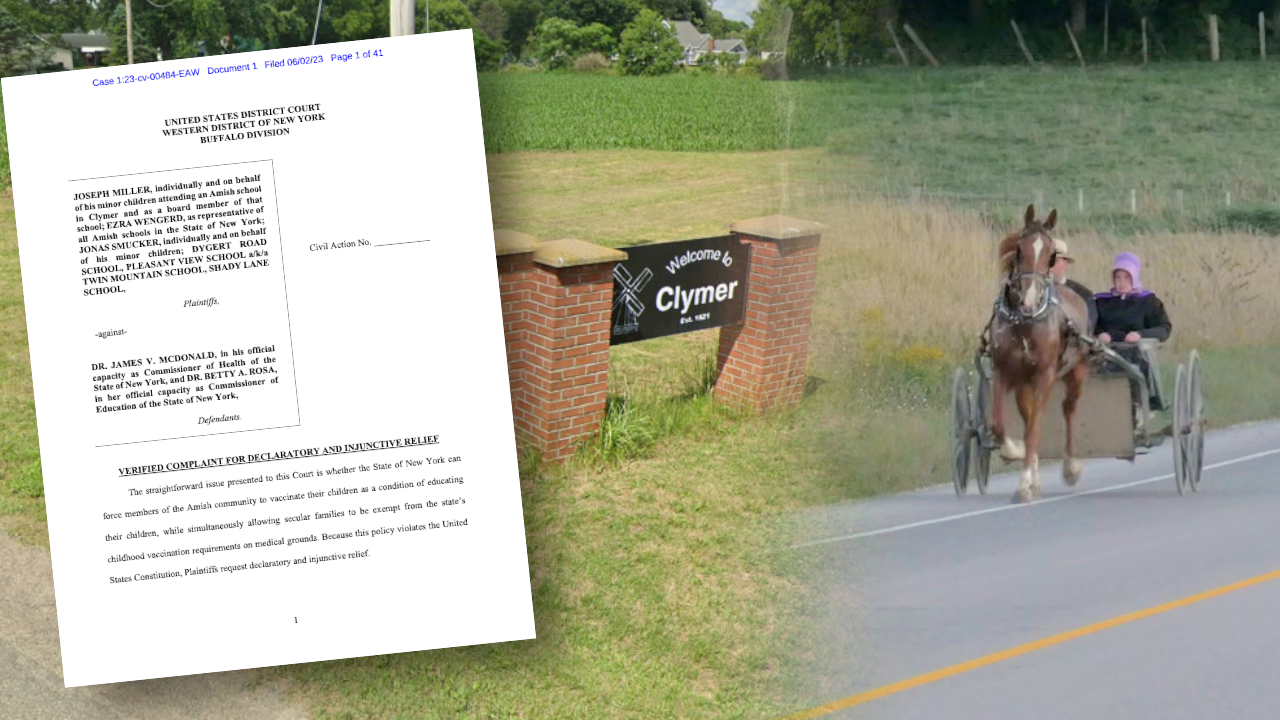


CLYMER, N.Y. (WKBW) — A legal battle over school vaccine requirements is unfolding in Western New York, where an Amish school in Chautauqua County is at the center of a case that could reach the U.S. Supreme Court for a second time.
The case challenges New York's decision to eliminate religious exemptions from school vaccination requirements. The outcome could have implications for religious freedom, parental rights and public health nationwide.
The legal fight comes as the country faces its largest measles outbreak in a generation, with cases spreading in Amish communities and other parts of the United States.
Chautauqua County school at center of lawsuit
The town of Clymer, in Chautauqua County, is home to one of New York's largest Amish populations.
It's where Joseph Miller's children attended Shady Lane School, an Amish-run school that was fined $20,000 by the state Health Department in 2022 for failing to comply with New York's school vaccination requirements.
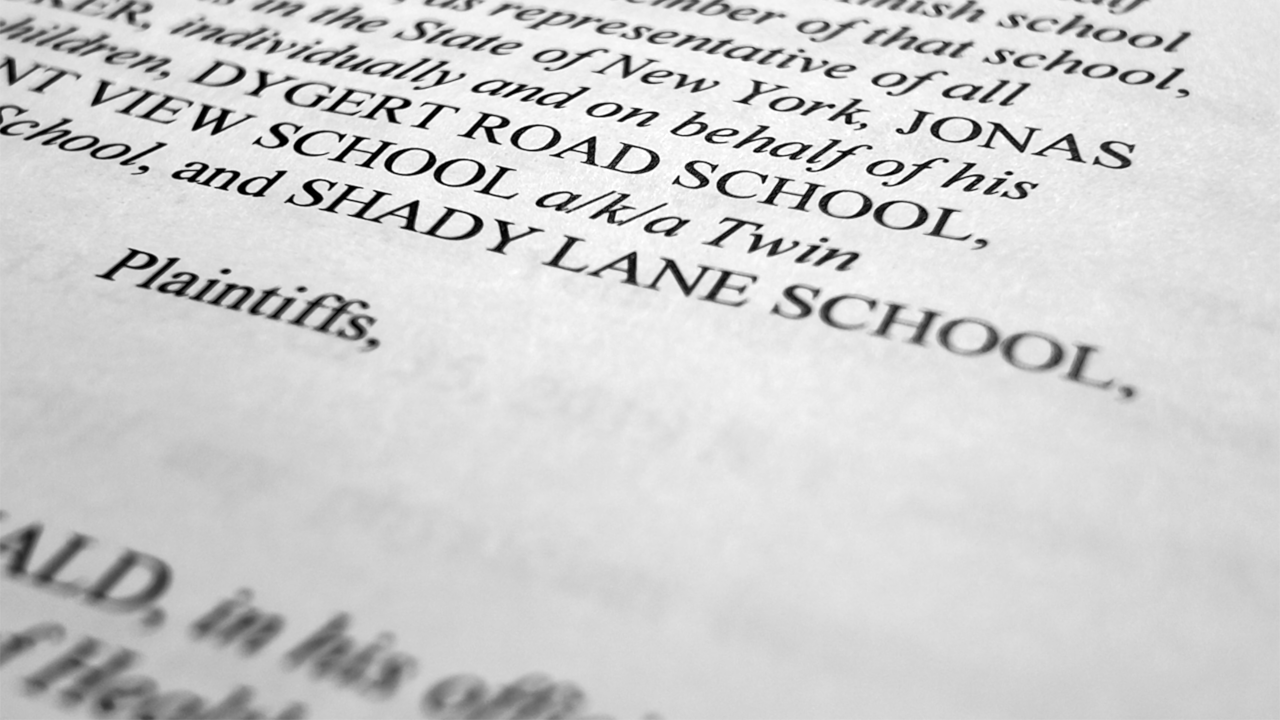
Miller and other plaintiffs challenged the state's policy, saying they "possess fervent religious objections to injecting their children with vaccines."
Their argument centers in part on the state's allowance for medical exemptions while prohibiting religious exemptions.
"There is a medical exemption, right, that students, parents can opt out based on medical reasons and therefore, if you can opt out for medical reasons, you should be allowed to opt out for religious reasons," said legal analyst Michael Macomber, who is a partner and CEO at Tully Rinckey PLLC.
Macomber said the plaintiffs' argument is that the state's vaccination requirements are not sufficiently neutral under the Constitution.
New York, meanwhile, has argued that the requirements are public health measures that apply to students regardless of their religious beliefs.
"New York's taking the position, this is a health requirement. It has to do with physical health and safety. It's neutral on its face. It applies to everyone. It has nothing to do with the free exercise of religion," Macomber said.
How the case reached the Supreme Court
The lawsuit first went before a federal judge in the Western District of New York. She ruled against the Amish plaintiffs, citing legal precedent upholding a similar vaccine requirement in Connecticut.
The plaintiffs appealed to the Second Circuit Court of Appeals, which also ruled against them.
They then asked the U.S. Supreme Court to take up the case. The justices instead sent it back to the appeals court for further consideration in light of Mahmoud v. Taylor, a recent ruling that strengthened certain parental rights claims involving public education.
The First Liberty Institute is among the organizations representing the Amish plaintiffs.
"A really important case, but a really important first victory at the Supreme Court," said Kelly Shackelford, First Liberty Institute's president, CEO and chief counsel.
That development did not ultimately change the outcome.
In June of this year, the Second Circuit again ruled against the Amish plaintiffs, finding that the burden on their religious beliefs did not meet the constitutional standard established in earlier cases involving religious freedom and parental rights.
"The burden may be serious, but it is not the kind of state interference with a child's religious development that triggered strict scrutiny in Yoder or Mahmoud," the appeals court wrote.
The plaintiffs are now asking the Supreme Court to consider the case again.
When asked how long it could take to reach a conclusion, Macomber said there is no clear timeline.
"Oh, that's the million-dollar question. I honestly don't know. The Supreme Court first has to make a decision as to whether or not they are going to even hear the case," he said.
Measles outbreak adds urgency to debate
The legal fight comes as measles cases increase across the country.
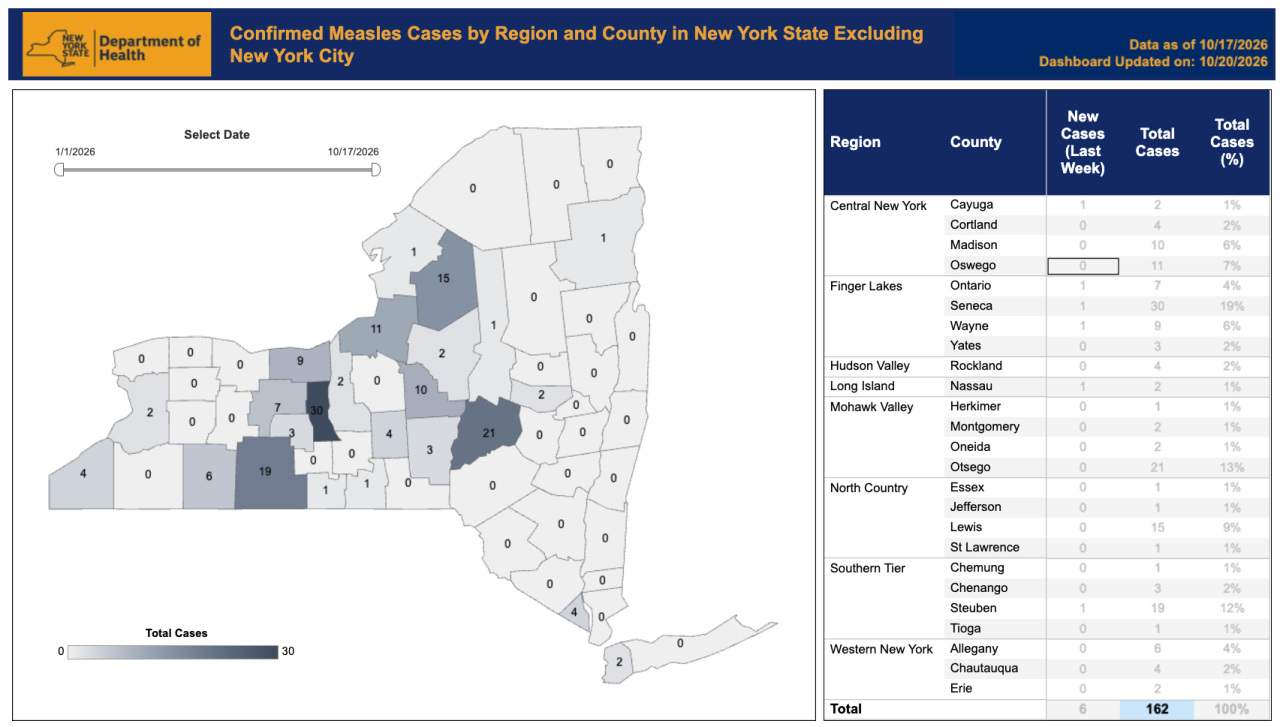
New York Gov. Kathy Hochul declared a state disaster emergency this month as cases continued to rise. Western New York has reported 12 confirmed cases so far this year, according to New York State's measles dashboard, with additional cases in counties to the east. Pennsylvania is also dealing with a major outbreak.
Macomber said the public health concerns could weigh in the state's favor as the Supreme Court considers whether to hear the case.
"A lot of that pressure is going to come into play as well, and that it does weigh in favor of the arguments that this is really, in fact, a health concern," he said.
New York health officials have previously pointed to the state's elimination of religious exemptions as a factor in limiting the spread of measles.
"New York State doesn't have religious exemptions, and that's really critical when you think about why we haven't had these outbreaks," Dr. James McDonald, the state health commissioner, previously told 7 News. "We do get a case or two, but our local health departments have done a great job of containing it."
In a statement, the state Health Department said it could not comment on pending litigation.
"While we cannot comment on pending litigation, the Department is committed to eliminating serious illness and unnecessary deaths caused by vaccine-preventable diseases," the department said.
What happens next?
For the plaintiffs, the dispute goes beyond vaccination requirements and raises broader questions about the balance between parental authority and government oversight.
"Ultimately this is about who is the authority over your children," First Liberty Institute's Shackelford said. "Is it the parents, or is it the government bureaucrat that controls those decisions, and so this is a really important case that will eventually affect the whole country."
The Supreme Court has not yet decided whether it will hear the case. If the justices agree to take it up, the court could revisit the constitutional questions surrounding religious exemptions from school vaccination requirements.
For now, New York's policy remains in place, and the legal fight continues.